What To Expect During Fence Installation Process
Knowing the installation process reduces surprises and stress. Pacific fence explains each step from site prep to final inspection. Call 13466814020 to review the timeline and logistics. Our crews work efficiently and communicate clearly.
When you're searching for what to expect during fence installation process, clarity matters. Pacific fence believes that a little transparency up front saves time, avoids delays, and keeps costs predictable. This guide walks you through planning, materials, the on-site sequence of work, and what happens after your fence is up. Read on to get a practical sense of each phase and how we communicate along the way.
We'll cover everything from property lines and permitting to post-setting, panel installation, cleanup, and final inspection. If you'd like a personalized timeline for your property, give us a quick call at 13466814020 - our project coordinators will explain the specifics based on lot layout, soil conditions, and the fence style you prefer. Clear expectations reduce surprises and help everyone stay on the same page.
Throughout the process, our crews focus on efficiency and respectful site management. You'll hear from a dedicated scheduler who outlines arrival times and expected duration for each major activity. If you have questions at any point, or the on-site foreman will review work progress and next steps. Knowing who to contact makes the experience less stressful and more predictable for homeowners.
Planning and site preparation
Good planning begins before the first post hole is dug. We start with a site visit to confirm property lines, utility locations, access points, and any special features like slopes, mature trees, or retaining walls. This step is essential for an accurate quote and to prevent delays once work begins. It also gives us the chance to flag potential obstacles and propose practical solutions.
Permits and local codes can influence the schedule and fence design. Pacific fence helps by identifying permit requirements in your area and advising on typical setbacks or height restrictions. If permits are needed, we'll either guide you through the application or submit documentation on your behalf. Knowing permit lead times up front helps set realistic installation dates.
Before we arrive, homeowners can prepare the site in a few simple ways to speed the job. Remove personal items and garden furniture from the work zone, trim back low-hanging branches near the fence line, and confirm access gates are unlocked for crews. Clear staging space allows deliveries and tool setup to happen quickly and safely.
- Mark private sprinklers, invisible pet fences, or buried landscaping lights.
- Locate and mark property corners and any known underground utilities.
- Arrange pets and children to remain away from the active work area.
- Communicate any sensitive plants or structures to avoid damage.
We also advise homeowners to check adjacent properties for shared fence obligations. If your fence borders a neighbor, a quick conversation avoids misunderstandings. When boundaries are in dispute, consider a professional survey before installing. With boundaries and utilities clear, installation proceeds with fewer interruptions.
Materials, styles, and realistic cost expectations
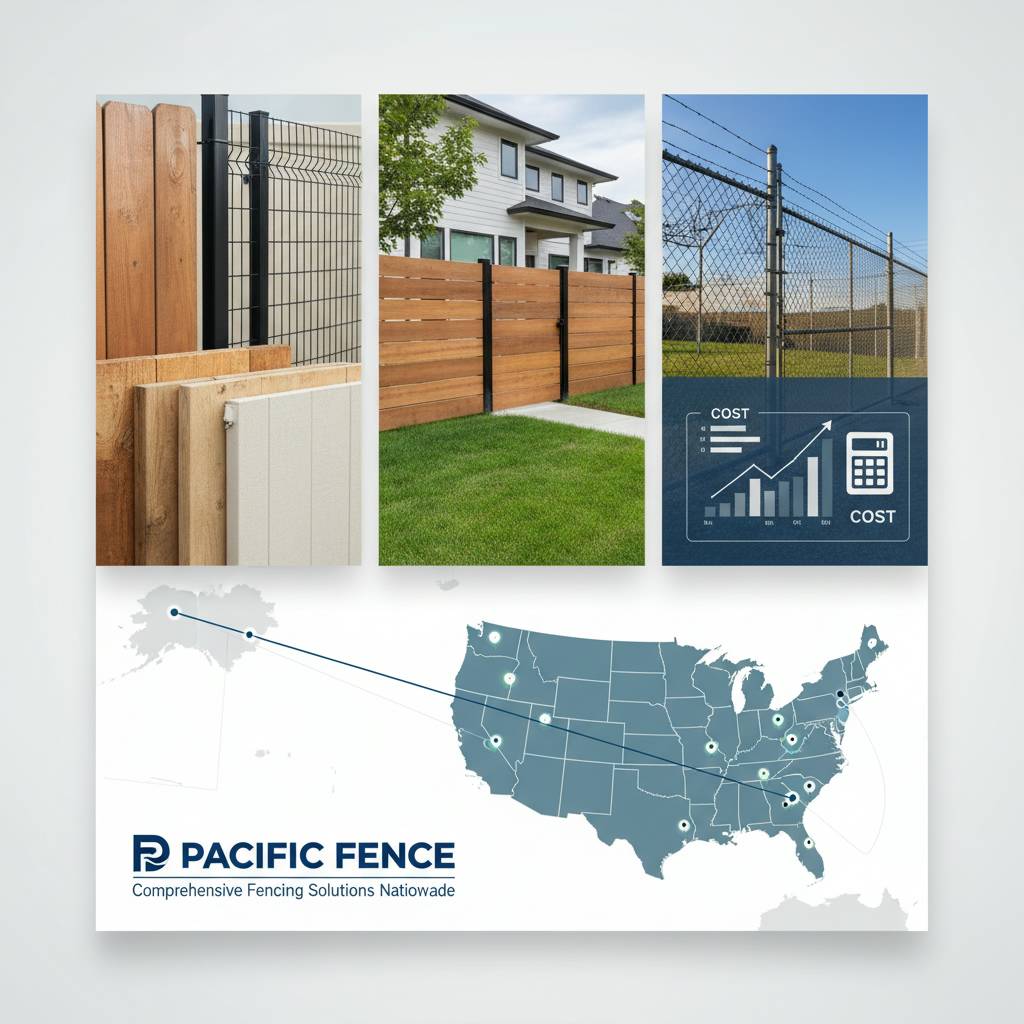 Choosing the right material affects appearance, durability, maintenance, and budget. Common options include wood, vinyl, aluminum, and chain-link, each fitting different needs and neighborhoods. Pacific fence will discuss pros and cons for every material so you can match functionality-privacy, pet containment, aesthetics-to long-term maintenance expectations and price range.
Here's a simple comparison of popular materials and typical cost ranges. These are ballpark figures that help set expectations; exact pricing depends on height, site conditions, and regional labor rates. All ranges are presented per linear foot to make comparisons straightforward.
| Material | Typical cost per linear foot | Best for |
|---|---|---|
| Wood | $75-$200 | Traditional privacy, customizable finishes |
| Vinyl | $90-$250 | Low maintenance, modern look |
| Aluminum | $50-$150 | Decorative, rust-resistant, pool code compliance |
| Chain-link | $20-$80 | Budget-friendly, functional containment |
Material choice also determines installation technique. For example, vinyl panels often use pre-molded post sleeves and require precise leveling, while wood systems may call for concrete-set posts and individual board attachment. We'll explain the specific approach for your chosen material so you understand why each step matters and how it affects longevity.
Don't forget gates and hardware. Hardware quality affects operation and long-term performance; stainless steel or galvanized options resist rust. Gate width, latch type, and reinforcement needs will be part of the quote. Small upgrades can extend lifespan and reduce future maintenance, which is an important trade-off to consider during planning.
The installation process: step-by-step
The actual fence installation typically follows a structured sequence so the site remains organized and work progresses efficiently. Below is an overview of what you will see on site from day one through completion. While every project adapts to site conditions, this sequence gives a clear framework of what to expect during fence installation process.
- Layout and stake-out: we double-check boundaries and mark post locations.
- Post digging and setting: holes are dug, posts are placed and set according to design-usually with concrete footings where required.
- Framework and rails: horizontal rails or bracing are attached between posts.
- Panel or picket installation: finish boards, panels, or mesh are fixed in place.
- Gate installation and adjustments: gates are hung and hardware tuned for smooth operation.
- Final grading and cleanup: the site is returned to a tidy condition and concrete is finished.
Post setting is the most critical structural step. Posts determine alignment, strength, and how well your fence withstands weather and use. Typically, holes are dug to a depth appropriate for local frost lines and post sizes. Concrete is poured for stability when required. If soil conditions are challenging-rocky, sandy, or clay-additional time or different techniques may be necessary.
Panel and picket attachment follows once posts and rails are secure. Installers will maintain consistent spacing and level lines across the run, checking frequently to ensure plumb and uniform appearance. For privacy fences, we often recommend alternating board patterns or reinforcements to minimize warp and maintain straight sightlines over time.
Gates are installed last so they can be adjusted to the completed fence line. We check swing clearance, latch alignment, and any required self-closing hardware for pool or safety codes. Finally, crews perform a professional cleanup, removing debris and placing concrete spoil or leftover materials in a designated spot if you prefer to keep them or have them hauled away.
Timeline, access, and common variables that affect schedule
Typical residential fence installations can be completed in one to several days depending on length, materials, and site complexity. A short chain-link run might be finished in a single day, whereas a multi-gate privacy fence on difficult terrain could take several days to a week. Weather, permitting, and underground utility locates are common variables that can extend the timeline.
Access to the work area is an important practical detail. Crews need room to stage wood, panels, concrete mix, and tools. Narrow side yards or steep driveways can require alternate staging plans and extra labor. When you schedule, we'll review access restrictions and arrange delivery size and timing that fits your property. This minimizes interruptions and allows the team to work safely.
Underground utilities are non-negotiable safety checks. Before digging any holes, we or you will contact the local utility locate service so all buried lines are marked. This is typically free but can add a day or more to the schedule depending on local response times. Never skip this step-knowing utility locations prevents dangerous and costly mistakes.
- Typical single-day tasks: short runs, chain-link installations, simple gate hangs.
- Multi-day projects: long runs, privacy wood or vinyl fences, difficult grading work.
- Permit or inspection delays: add permit processing time into your schedule.
- Weather impacts: heavy rain or frost can halt concrete work and extend completion.
Final inspection, warranty, and maintenance expectations
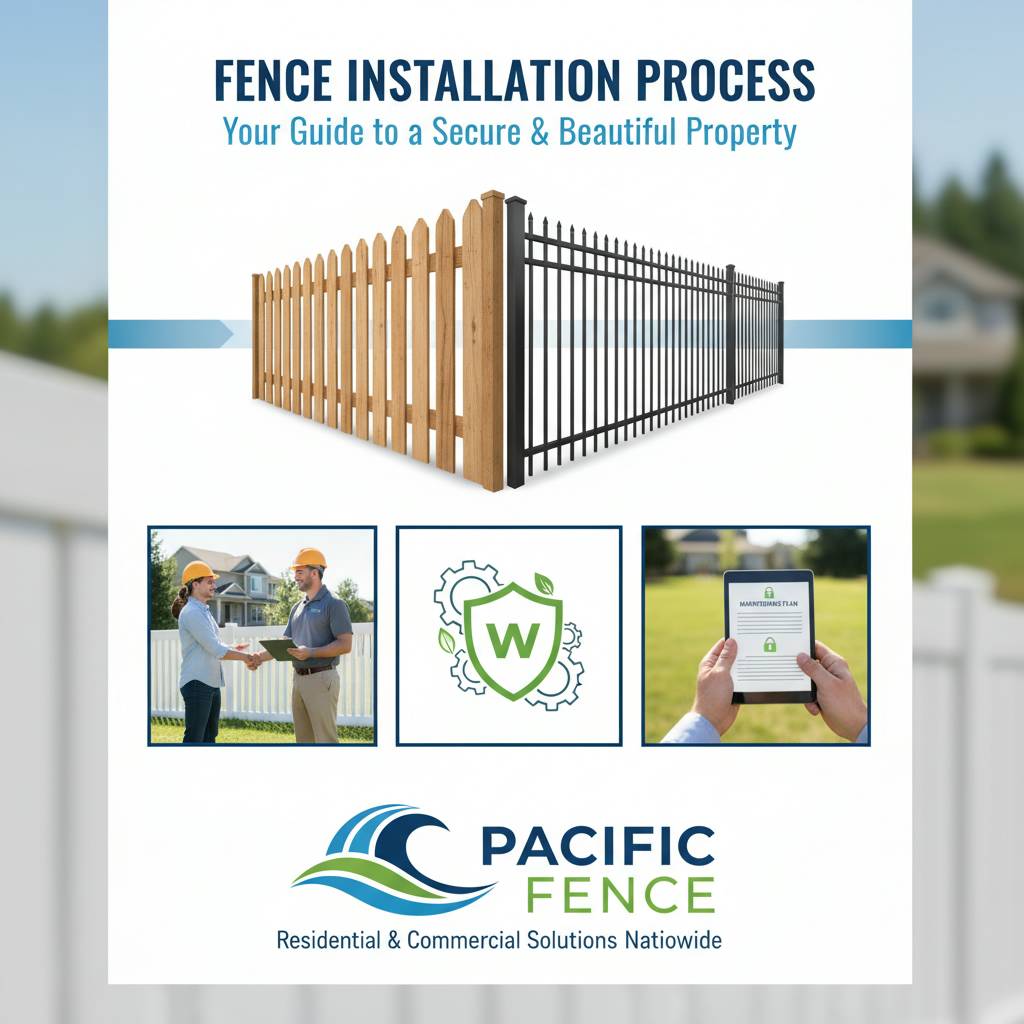 Once installation is complete, we perform a walkthrough to confirm alignment, gate operation, and aesthetic expectations. Any adjustments-tightening hardware, realigning a post cap, or touching up stain-are addressed on the spot when feasible. We'll then provide documentation on warranties, recommended maintenance, and emergency contacts should anything unusual arise.
Maintenance varies by material. Wood fences typically need staining or sealing every few years to maintain appearance and prevent rot. Vinyl requires a simple wash to remove dirt and mildew. Metal fences benefit from occasional lubrication of moving parts and inspection of fasteners. We'll leave a care sheet specific to your material that outlines the simple steps homeowners can take to protect their investment.
Warranties differ between material manufacturers and labor coverage from installers. Pacific fence provides a clear explanation of what our labor warranty covers and how manufacturer warranties work for the chosen components. Keep your invoice and any manufacturer literature - those documents are helpful if a part fails or an unexpected issue appears.
FAQ: Common questions about finishing and inspections
Q: Will there be a final inspection by the city? A: If your project required a permit, an inspection may be scheduled by the city. We coordinate with inspectors and often attend to answer questions. Q: What if I notice a problem after installation? A: Contact us promptly; minor adjustments are typically covered by our labor warranty within a specified timeframe.
How to get started and what to expect next
If you're ready to move forward, the next step is a site visit and a written estimate. During that appointment we'll discuss materials, set a preliminary timeline, and check for any permit needs or special site conditions. Estimates are transparent and include a clear scope of work so there are no surprises once installation begins.
To schedule a review or to talk through options with a project coordinator, call 13466814020. We'll go over what to expect during fence installation process specific to your property and provide a realistic schedule. Our goal is straightforward: help you make informed decisions and complete the job with minimal disruption and clear communication throughout.
Thank you for considering Pacific fence for your fencing needs. If you have questions, want references, or would like a free estimate, please contact Pacific fence at 13466814020. We look forward to explaining the plan for your property and making the installation process smooth and stress-free.