Durability Comparison Professional Vs DIY Fence Installation
Durability often favors professional installation due to proper techniques. Pacific fence provides case studies and examples that highlight differences. Call 13466814020 to review real world outcomes. Our focus is on structures that stand up to time.
When deciding between tackling a fence project yourself or hiring a pro, durability is one of the most important factors to weigh. At Pacific fence, we focus on structures that stand up to time because a fence is more than curb appeal; it protects property, defines boundaries, and resists weather and wear. This guide explores the durability comparison professional vs DIY fence installation so you can make an informed choice that aligns with your budget, timeline, and long-term expectations.
Why durability matters for fences
Durability affects maintenance frequency, overall cost over a fence's lifetime, and how confident you can be that your investment will perform as intended. A poorly installed fence can lean, rot, or fail after only a few seasons, creating safety issues and the need for costly repairs. Conversely, a well-built fence resists moisture, pest damage, and wind forces, keeping repair cycles minimal and preserving the property's value.
Consider local climate and soil conditions: freeze-thaw cycles, coastal salt spray, heavy rainfall, or dry heat all impose different stresses. The right foundation, post-setting methods, and material selection tailored to those conditions will significantly extend life. That's why a durability-first approach isn't only about materials, but also about proper installation techniques and inspection routines that professionals routinely employ.
Durability comparison: professional vs DIY fence installation
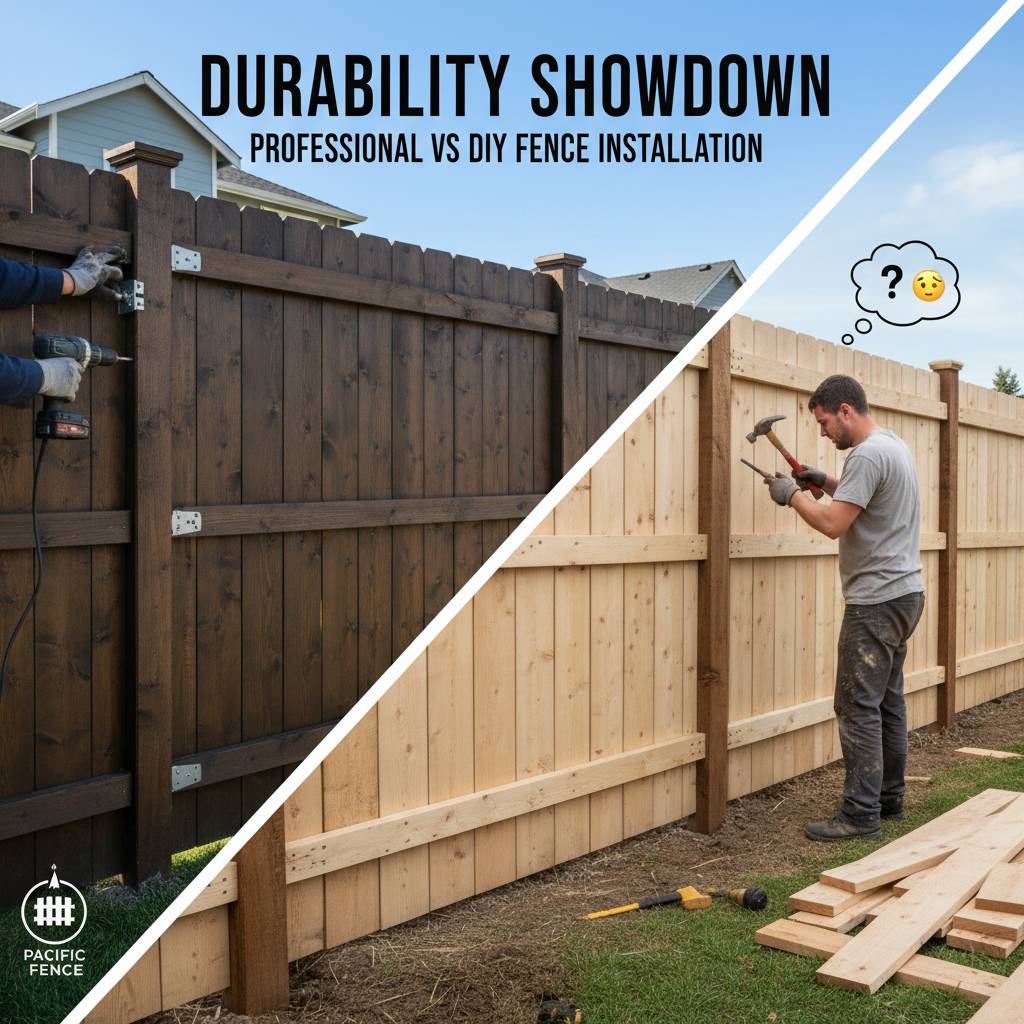 Below is a practical comparison of the most common elements that determine fence lifespan. This section highlights the technical differences between professional and DIY installations that directly affect durability. Read it as a checklist of what to look for or ask about when planning a project.
Key factors that influence longevity
- Post setting and depth: Professionals follow local codes and best practices for post depth and concrete footings, reducing movement and sagging over time.
- Material selection and finishing: Choosing pressure-treated timber, galvanised hardware, powder-coated steel, or composite boards makes a measurable difference in decay and rust resistance.
- Fastening techniques: Proper screw types, spacing, and pre-drilling prevent splitting and loosened boards; professionals typically use specific patterns that improve stability.
- Site preparation: Grading, drainage planning, and avoiding underground utilities all contribute to a fence that doesn't undermine surrounding soil or settle unevenly.
Comparison table: typical outcomes
| Installation Aspect | Professional Installation | DIY Installation |
|---|---|---|
| Post alignment and verticality | High consistency; measured templates and levels | Varies widely; higher chance of out-of-plumb posts |
| Proper post depth & concrete mix | Yes; typically meets local standards | Sometimes shortcuts taken; shallower posts more common |
| Material handling and cutting | Minimises waste and protective treatments applied | Good results possible but risk of exposed cuts or improper treatments |
| Warranty and inspection | Often includes workmanship warranty and follow-up | No warranty beyond product manufacturer |
Common failure modes and how professionals prevent them
Understanding how fences typically fail helps explain why installation method matters. Rot, movement, loose fasteners, and poor drainage are frequent culprits. Professionals anticipate these issues and build in resilience: they set posts below the frost line where applicable, use proper concrete mixes and backfill compaction, and install hardware that resists corrosion. This forward planning directly improves a fence's expected service life.
Another common failure mode is inadequate separation between wood and soil or water. Professionals will raise rails and boards off the ground where needed, apply appropriate finishes to cut surfaces, and suggest or install cap boards and post tops that shed water. These details may seem small, but they materially reduce moisture intrusion and biological decay.
Materials, hardware, and hidden details
The choice of hardware-screws, hinges, post anchors, and brackets-affects durability as much as wood species or composite grade. Professional installers often specify stainless steel, galvanized, or coated fasteners designed for the intended environment; DIY installs sometimes use economy screws that rust and back out over time. Furthermore, hidden details like flashing between posts and rails, or the choice of concrete additives for expansive soils, are part of why professionals can deliver longer-lasting results.
Case studies and real-world examples
Examples from field work are the most concrete way to see long-term differences. One suburban property where a DIY fence leaned within two years had shallow posts and compacted backfill that settled during rain events. The repair required replacement posts set to greater depth and improved drainage-work that could have been avoided with initial professional installation.
In contrast, a neighborhood project where Pacific fence installed mixed-material fencing (steel posts with wood infill) has remained straight and secure for over a decade. The combination of properly anchored posts, powder-coated steel resistant to coastal corrosion, and routine maintenance plans extended useful life well beyond the original homeowner's expectations. This real-world outcome demonstrates how combining the right materials with installation techniques yields measurable longevity.
- Case: Coastal property - professional selection of stainless hardware prevented hinge failure that commonly affects similar fences.
- Case: Rural lot - deeper post hole strategy and local soil testing avoided post heave and subsequent board warping.
- Case: Urban yard - precise gate alignment using jig templates reduced wear on latches, extending gate life by years.
Cost, value, and long-term economics
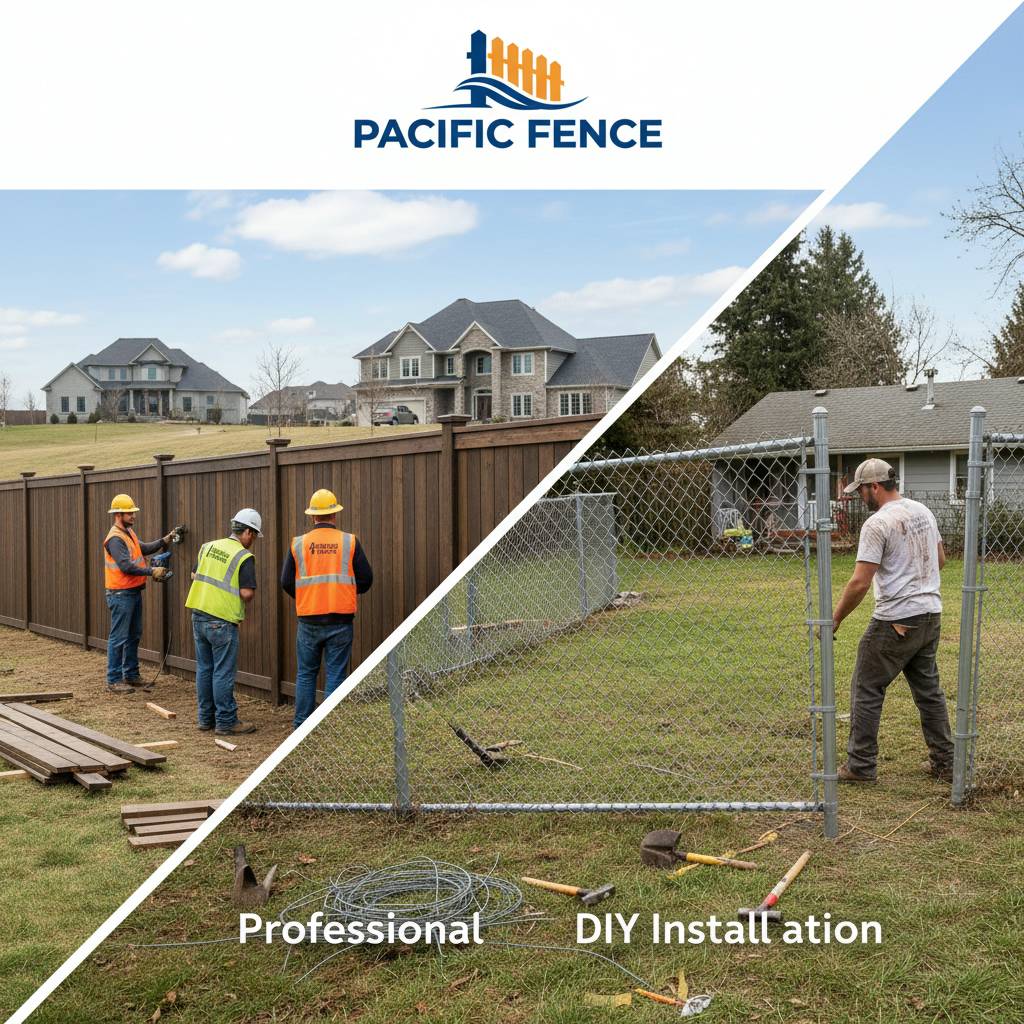 Durability directly affects lifetime cost. A less expensive DIY installation can appear cost-effective initially, but if boards rot, posts move, or hardware fails, repeated repairs quickly erase early savings. Professionals generally charge more up front, but they can also reduce lifetime expenditures through better techniques, warranties, and selective material upgrades that postpone full replacement.
When evaluating costs, consider these typical line items: material quality, labor for correct post setting, drainage and grading work, and warranty coverage. For minor repairs or decorative projects where lifespan expectations are short, DIY can make sense. For primary boundary fences, security gates, or installations in challenging climates, the value of professional durability is usually greater over a 1020 year horizon.
Budgeting examples
- Simple picket repair with minor hardware: $75-$200 in parts and tools for DIY; $200-$500 for professional repair depending on travel and complexity.
- Full fence replacement-economy materials: DIY costs may be lower up front but expect a higher likelihood of earlier failure; professional replacement often includes warranties that protect that investment.
- Upgraded corrosion-resistant installation for coastal areas: higher initial cost but substantially reduced maintenance and replacement needs.
How to decide: practical steps and checklist
Making a choice between DIY and pro installation is best done with clear priorities. Start by defining how long you want the fence to last, the level of maintenance you're willing to accept, and the intended function-privacy, security, pet containment, or marking property lines. Once priorities are clear, follow a decision checklist to evaluate risk and expected outcomes.
- Assess site conditions: soil type, slope, drainage, and exposure to weather extremes.
- Define desired lifespan: temporary (3-7 years) versus long-term (15 years).
- Estimate your own skill level and time availability for ongoing maintenance.
- Request references or case studies when considering professional installers; inspect recent work if possible.
- Compare warranties: workmanship warranty often distinguishes professional services from DIY.
If you lean toward hiring a pro, ask about drainage solutions, post-setting depth relative to freeze lines, hardware type, and how they protect cut wood surfaces. If you choose DIY, plan for proper post holes, correct concrete mixes, and corrosion-resistant fasteners to mitigate common durability gaps.
Frequently asked questions
Can a DIY fence ever match the durability of a professional installation?
Yes, in some cases a skilled DIYer who follows best practices, uses quality materials, and plans for site-specific challenges can achieve durability comparable to professional work. However, professionals bring repeatable systems, specialised tools, and experience with uncommon issues-like hidden rock layers or expansive clay soils-that often influence long-term outcomes.
How much does post depth really matter?
Post depth is one of the single most important factors for stability. Shallow posts are more likely to lean or heave over time. Professionals typically set posts to local code depth or deeper, and they use consistent concrete mixes and compaction methods to reduce movement. If you DIY, follow local guidelines and consider deeper settings in unstable soils.
Is a warranty worth the extra cost?
Workmanship warranties give you recourse if installation-related issues appear within the coverage period. For critical fences or those bordering public access, a warranty is often worth the additional upfront cost because it reduces long-term uncertainty and potential repair costs.
Final considerations and recommended next steps
Choosing the installation path affects more than immediate cost; it shapes maintenance frequency, visual integrity, and safety for years to come. When durability matters, investing in proper techniques, site preparation, and materials pays off. If you value a long-lived fence that resists time and environment, professional installation typically offers the most reliable outcome.
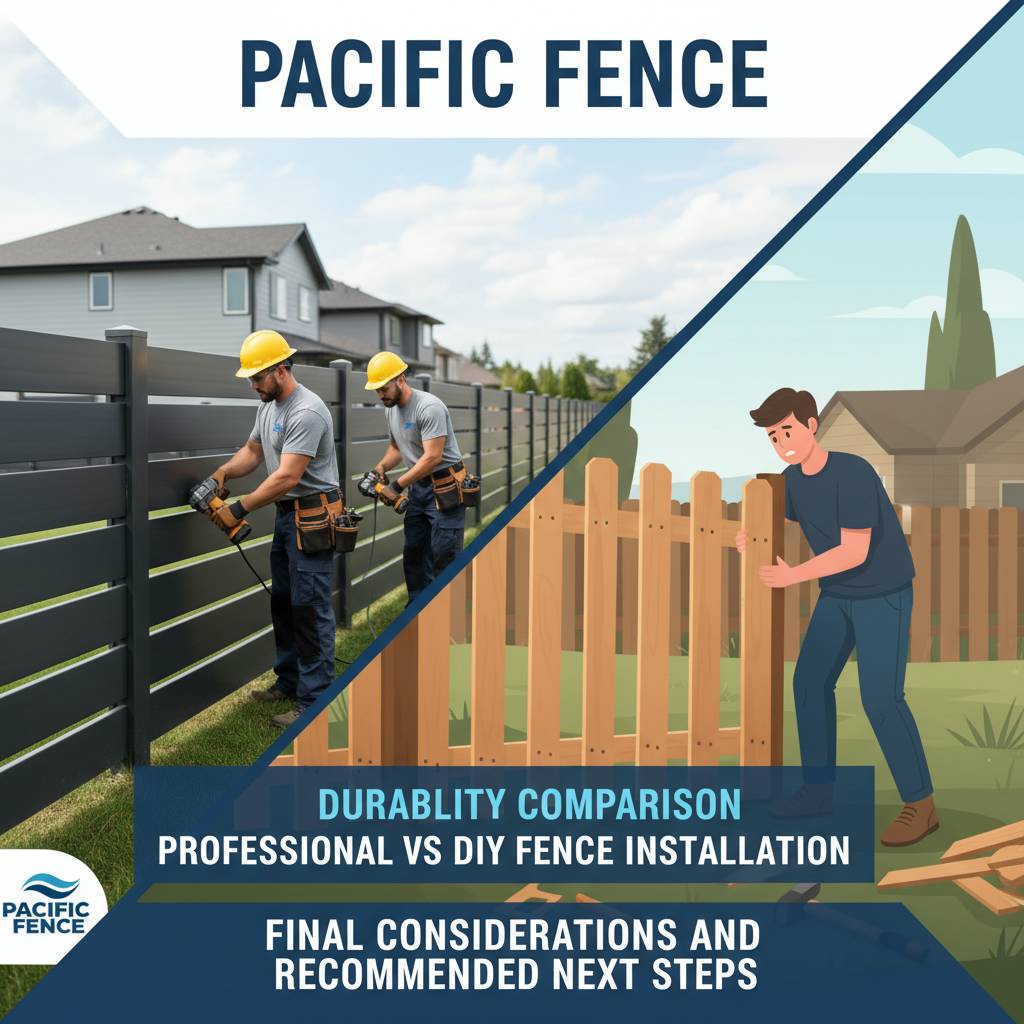
Pacific fence brings practical experience and documented case studies that illustrate these differences in real-world projects. Whether you are weighing a DIY approach for small tasks or considering a full professional installation for long-term performance, we can review your site and help you understand the trade-offs and expected lifecycle costs.
Call 13466814020 to schedule a consultation and review the case studies most relevant to your property. Our team will outline the options and identify which choices will give you the best durability for your budget.
For a quick next step, gather photos of the site, note any drainage issues or slopes, and list your primary goals (privacy, security, aesthetics). We'll use that information to give a candid assessment and, if helpful, provide a range of cost and life expectancy options.
Thank you for considering Pacific fence. If you're ready to discuss how to create a fence that stands up to time, contact Pacific fence at 13466814020.