Professional Vs DIY Fence Installation Pros And Cons
Evaluating pros and cons helps you choose the best approach. Pacific fence outlines trade offs in cost time and durability to guide your decision. Call 13466814020 for an honest assessment. We present options that match your goals and budget.
Deciding between professional vs DIY fence installation pros and cons can feel overwhelming, especially when you weigh budget, timeline, and the long-term life of the fence. This guide walks through the practical trade-offs so you know what to expect with each path. Whether you crave control over every detail or prefer someone else handle the heavy lifting, Pacific fence helps make the choice clearer. If you want to speak with a technician about your site, call 13466814020 for an honest, no-pressure assessment.
Cost: Upfront investment and long-term value
Cost is usually the first consideration. On the surface, DIY looks like the clear winner: you pay only for materials and perhaps tool rental. But when you account for mistakes, returns, and the time you invest, the numbers shift. Professional installation bundles materials, labor, and expertise into one price, which can be higher up front but often reduces unforeseen expenses down the road. Think of cost as both immediate outlay and long-term value.
Typical ranges vary by material and region. For example, materials for a wood privacy fence might be $10-$30 per linear foot, while professional installation may run $30-$60 per linear foot. Repairs or post replacement can be $75-$200 per post depending on access and materials. Those numbers help frame the trade-offs: DIY reduces labor cost but increases the potential for rework or faster wear if the job isn't done to best practice.
Time and convenience: How long will it take?
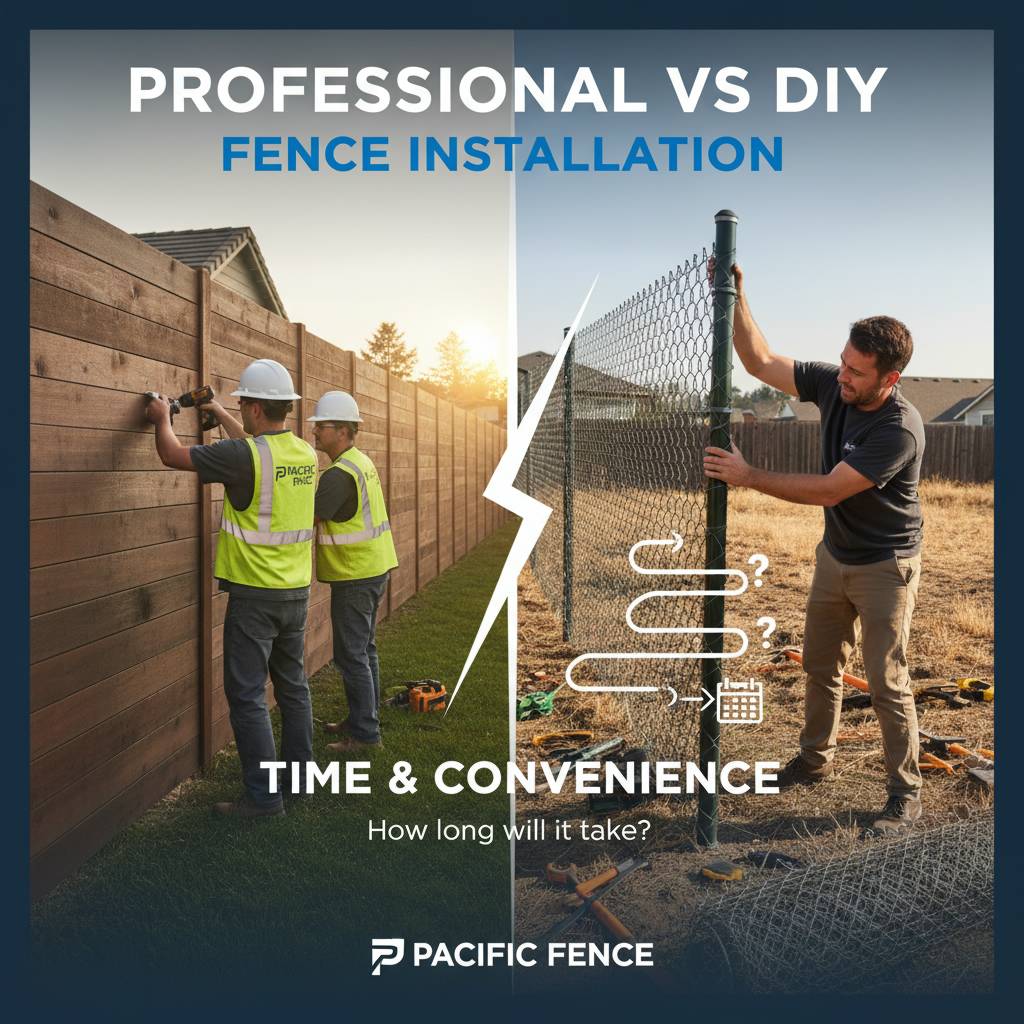 Time is another key factor. A professional crew can often complete a standard fence installation in a day or two for small to medium yards, because they bring labor, equipment, and a practiced workflow. DIY projects require scheduling around your free time, dealing with delays like bad weather or shipping issues, and learning on the job if you're new to fencing. If you value convenience and minimal disruption, professional installation often wins.
However, some homeowners enjoy the pace and satisfaction of doing the work themselves. DIY can be spread over weekends to fit your schedule, and you'll control the pace and details. Just be realistic: expect a learning curve, possible longer timelines, and the need to reserve full weekends or time off to complete a larger project. Factor those opportunity costs into your decision.
Durability and quality: Will the fence last?
Durability ties directly to installation quality and material choice. Professionals bring years of experience with post spacing, proper depth, concrete setting, drainage considerations, and finishing details that prevent premature failure. A professionally installed fence often performs better under seasonal stresses and can carry a workmanship warranty, giving you additional peace of mind. In many cases, that extra durability pays for itself over time.
DIY fences can be long-lasting when installed by a careful and knowledgeable homeowner, but common DIY pitfalls include inadequate post depth, incorrect board spacing, poor alignment, and insufficient treatment for rot or corrosion. These mistakes are fixable, but they increase long-term maintenance. If long-term durability is the top priority and you lack experience, a professional installation may be the prudent choice.
Permits, codes, and property lines: legal and logistical considerations
One area that trips up many DIYers is permitting and local codes. Fencing regulations vary by city, county, and homeowner association. They can govern height, materials, visibility at corners, and required setbacks from property lines. Professionals are familiar with local rules and often pull permits on your behalf, streamlining the process and avoiding fines or forced removal later.
Common permit triggers
- Fence height above a specified limit (often around 6 ft for backyard fences).
- Location near a street corner or easement that requires visibility sightlines.
- Changes affecting drainage or shared utilities.
- Installation on a property line that involves neighbor consent.
If you plan a DIY install, verify local codes before buying materials. Property surveys and clear discussions with neighbors about boundary lines can prevent disputes. For complicated sites-steep slopes, retaining walls, or underground utilities-consider professional help even if you handle other aspects yourself.
Skill, tools, and safety: What you'll need for DIY
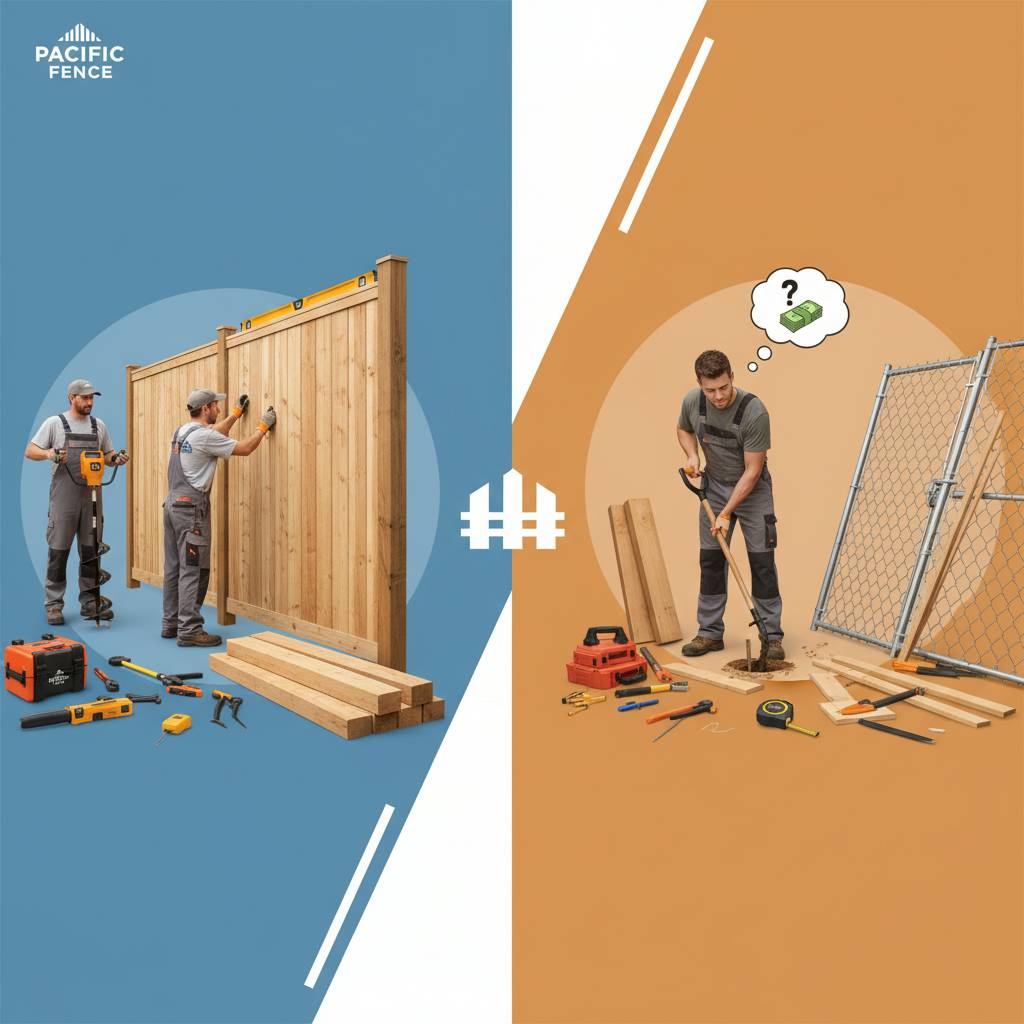 A strong DIY result depends on skill and the right tools. Basic fence jobs require post-hole digging tools (auger or post-hole digger), levels, string lines, saws, and concrete mixing capabilities. For heavier materials like metal or concrete posts, specialized equipment and knowledge of welding, anchoring, or heavy lifting are necessary. If you don't own these tools, rentals add to cost and complexity.
Safety is another important concern. Digging without locating utility lines can be dangerous and costly; call your local call before you dig number before beginning. Heavy posts and panels can cause injury if handled solo, and improper drainage or footing can create hazards later. Professionals are trained in safety protocols and come insured, which mitigates workplace risk for you and your property.
Comparing pros and cons: quick overview
Below is a compact comparison to visualize the trade-offs between professional and DIY approaches. Use it as a reality check for your priorities-budget, timeline, quality, and control.
| Factor | Professional | DIY |
|---|---|---|
| Upfront Cost | Higher labor included | Lower if you already own tools |
| Time | Faster completion | Slower, fits your schedule |
| Quality & Durability | Higher consistency, warranties | Varies with skill level |
| Permits & Paperwork | Handled by contractor | Requires homeowner research |
| Control & Customization | Professional recommendations | Full creative control |
Decision framework: questions to ask yourself
To decide between professional vs DIY fence installation pros and cons, use a simple decision checklist. Prioritize the items that matter most to you: budget, time, long-term maintenance, and aesthetic control. Answering these questions honestly will usually point clearly to one approach.
- How important is budget versus long-term durability?
- Do you have experience with similar projects or access to skilled help?
- Can you take time off or commit weekends to complete the job?
- Does the job require permits, neighbor agreements, or complex site work?
- Are you comfortable renting or buying specialized tools?
For many homeowners, a hybrid approach works well: hire a professional for the structural work-post setting and grading-and handle finishing touches like staining, painting, or adding decorative elements yourself. This splits labor cost while ensuring the core structure is done correctly. customers often appreciate that balance because it maximizes durability without losing personal involvement.
Real-world scenarios: when each option makes sense
Scenario 1: You want a simple backyard picket fence to mark a boundary and add charm. If the site is flat, permits are not required, and you have basic carpentry skills, DIY saves money and lets you craft a personalized look. Expect several weekends of work and the need to learn best practices for post spacing and alignment.
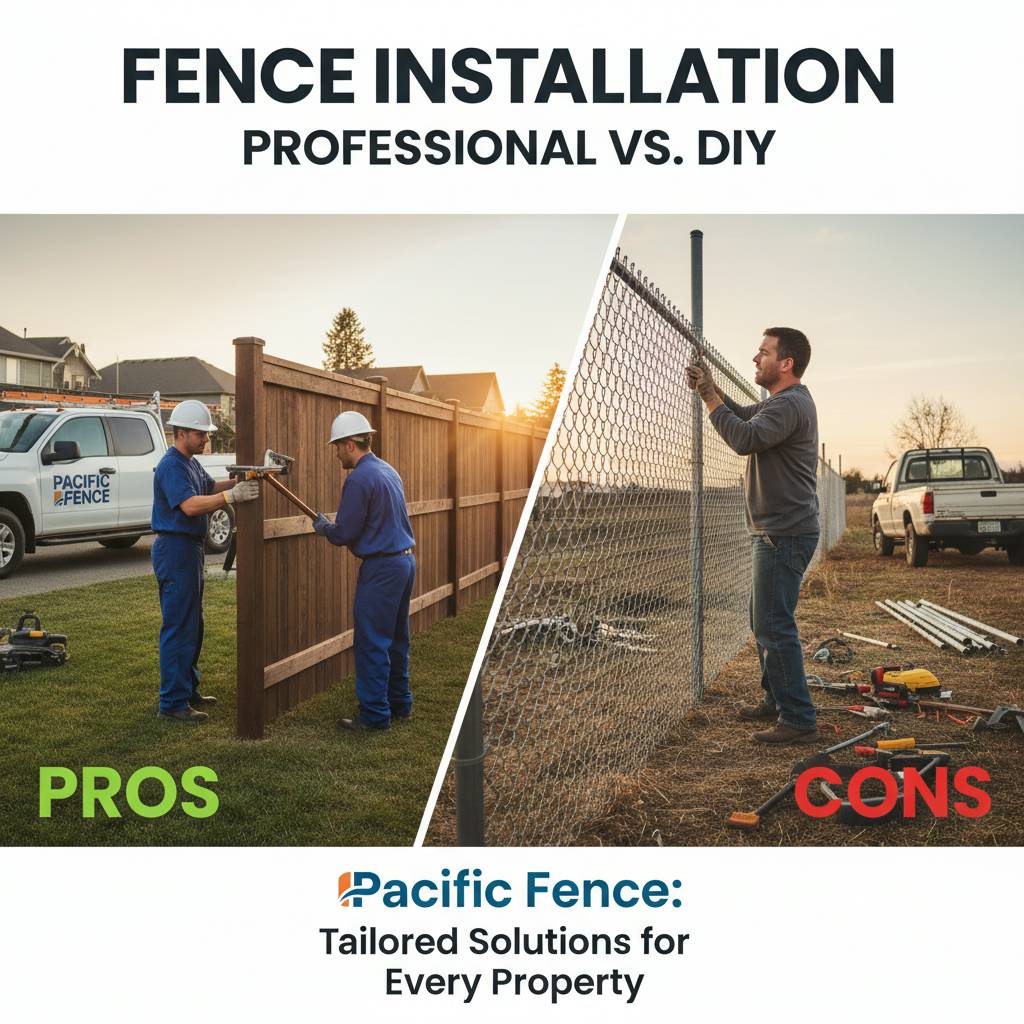
Scenario 2: You need a tall privacy fence along a busy road or an uphill slope where correct post depth and drainage are critical. In this case, professional installation is often the smarter choice. Contractors bring experience with challenging terrain, can handle required permits, and offer warranties that protect your investment over time.
Maintenance expectations: after the installation
Regardless of who installs the fence, maintenance affects how long it lasts. Wood requires staining or sealing every few years to resist rot and UV damage, while vinyl and metal have different maintenance profiles-vinyl is low-maintenance but can become brittle in extreme climates, and metal may need rust prevention. Knowing the long-term care needed for your chosen material helps you choose the right installation method and budget for upkeep.
Professionals can often recommend maintenance routines and may offer maintenance plans. If you choose DIY, build a maintenance schedule into your plan so the fence remains an asset rather than a liability. Regular checks for loose boards, shifting posts, and water pooling can prevent small problems from becoming expensive repairs.
Frequently asked questions
How do I know if my fence is on my property line?
Start with a property survey or recorded plat map. If boundaries are unclear, a licensed surveyor can mark corners and lines for a fee. Avoid digging or setting permanent posts without confirming the line because correcting a misplaced fence can be costly and legally sensitive.
Are warranties worth the extra cost?
Warranties provide tangible assurance that materials and labor meet expected standards. A workmanship warranty on installation can save money if something goes wrong early. Materials warranties vary by product; review terms for coverage length and exclusions before making a purchase decision.
Can I install parts myself after professionals set posts?
Yes. Combining approaches-having professionals set and concrete posts and then installing panels, rails, or decorative elements yourself-can be an efficient compromise that reduces labor costs while ensuring structural integrity.
What should I budget for hidden costs?
Hidden costs include permit fees, rental tools, stump removal, dealing with tree roots or rock, neighbor boundary disputes, and call-before-you-dig utility locates. Add a contingency of 10%-20% to your estimated material cost to cover surprises.
Closing thoughts and next steps
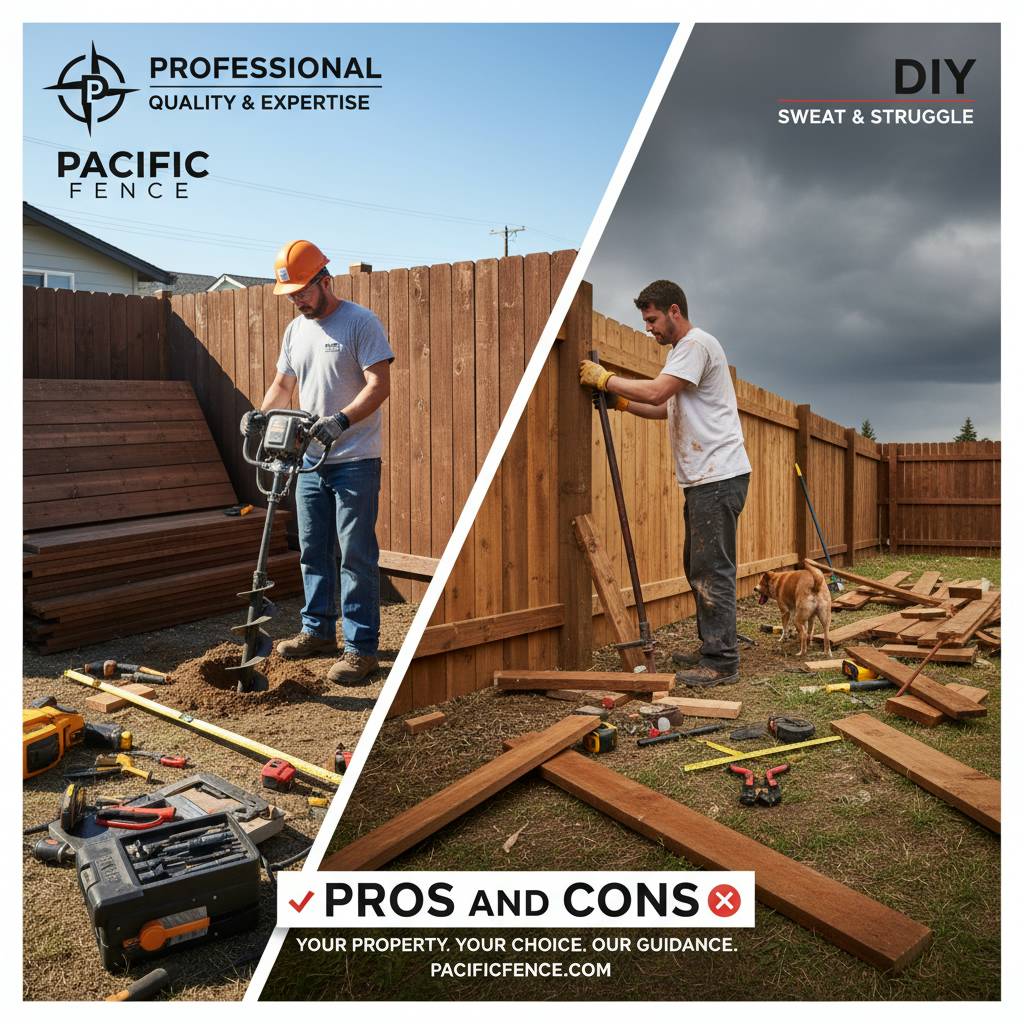 Choosing between professional and DIY fence installation comes down to priorities: budget versus convenience, immediate savings versus long-term value, and how comfortable you are with project complexity and physical labor. There's no one-size-fits-all answer, but this guide highlights the main trade-offs so you can make an informed decision that aligns with your goals.
If you want a site-specific recommendation, Pacific fence offers friendly, practical assessments to match options to your budget and timeline. Call 13466814020 for a frank conversation about whether a professional installation or a DIY approach is right for your situation. We'll outline realistic costs, timelines, and durability expectations so you can move forward with confidence.
Ready to discuss your fence project? Contact Pacific fence today for an honest assessment and straightforward options that reflect what matters most to you.