Long Term Cost Comparison Professional Installation Versus DIY
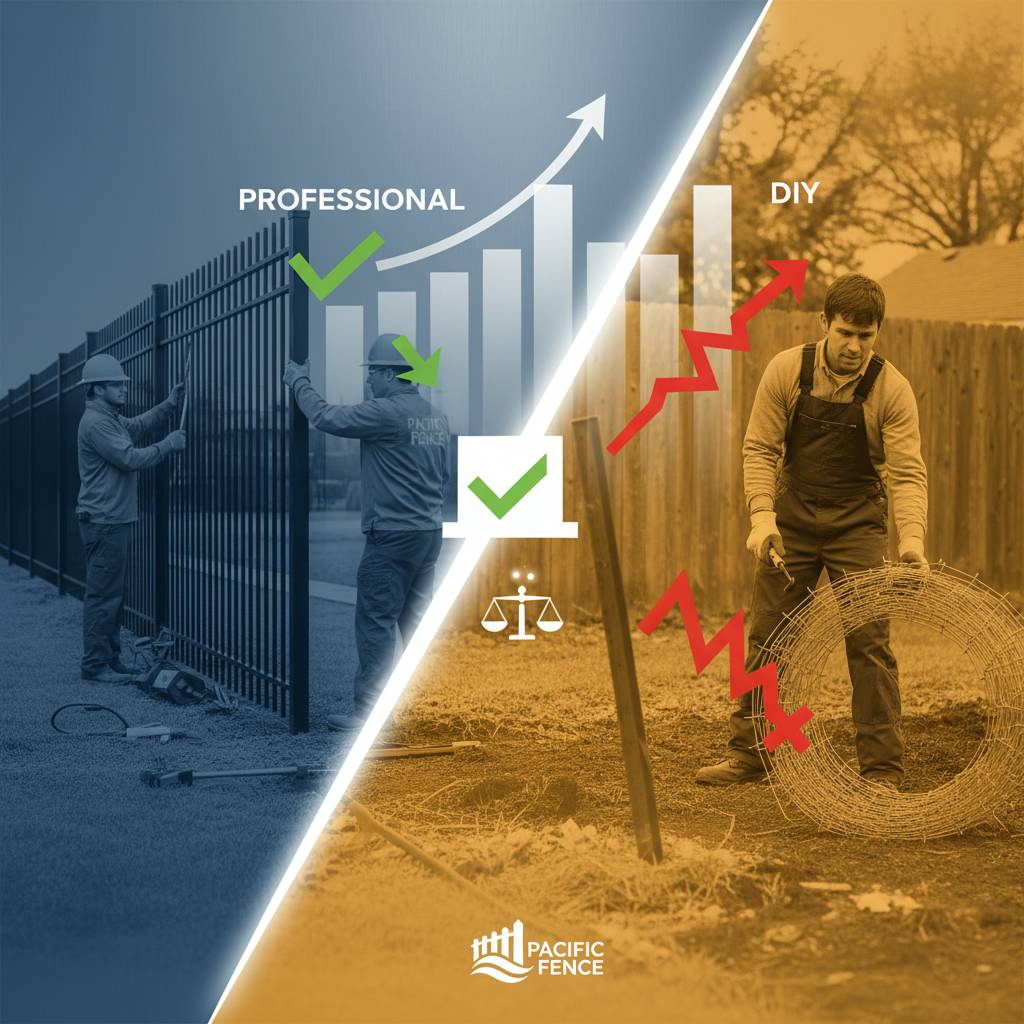
A long term cost comparison reveals the true value of professional work. Pacific fence prepares side by side estimates that include maintenance and repair. Call 13466814020 to see the full financial picture. We aim to demonstrate savings over time.
Why a long term cost comparison matters
Decisions about repairs, upgrades, or new installations are often driven by upfront price. However, focusing only on initial cost overlooks ongoing expenses that quickly accumulate. A thoughtful long term cost comparison professional installation versus DIY examines not just the sticker price but the expected maintenance, frequency of repairs, longevity, safety risks, and impact on property value over time.
Pacific fence prepares side-by-side estimates that reveal these differences in plain terms, showing which option is less expensive over a 5-, 10- or 20-year horizon. This is especially important for systems with safety implications-electrical, plumbing, roofing, and HVAC-where poor workmanship can incur hidden costs like energy waste, emergency calls, fines, or accelerated replacement.
Beyond pure dollars, a long term view clarifies intangible benefits such as warranty coverage, documented permits, and professional accountability. When you compare all costs together, including time and risk, a professional solution often emerges as the more economical and reliable choice for homeowners and property managers alike.
Components that should be included in every estimate
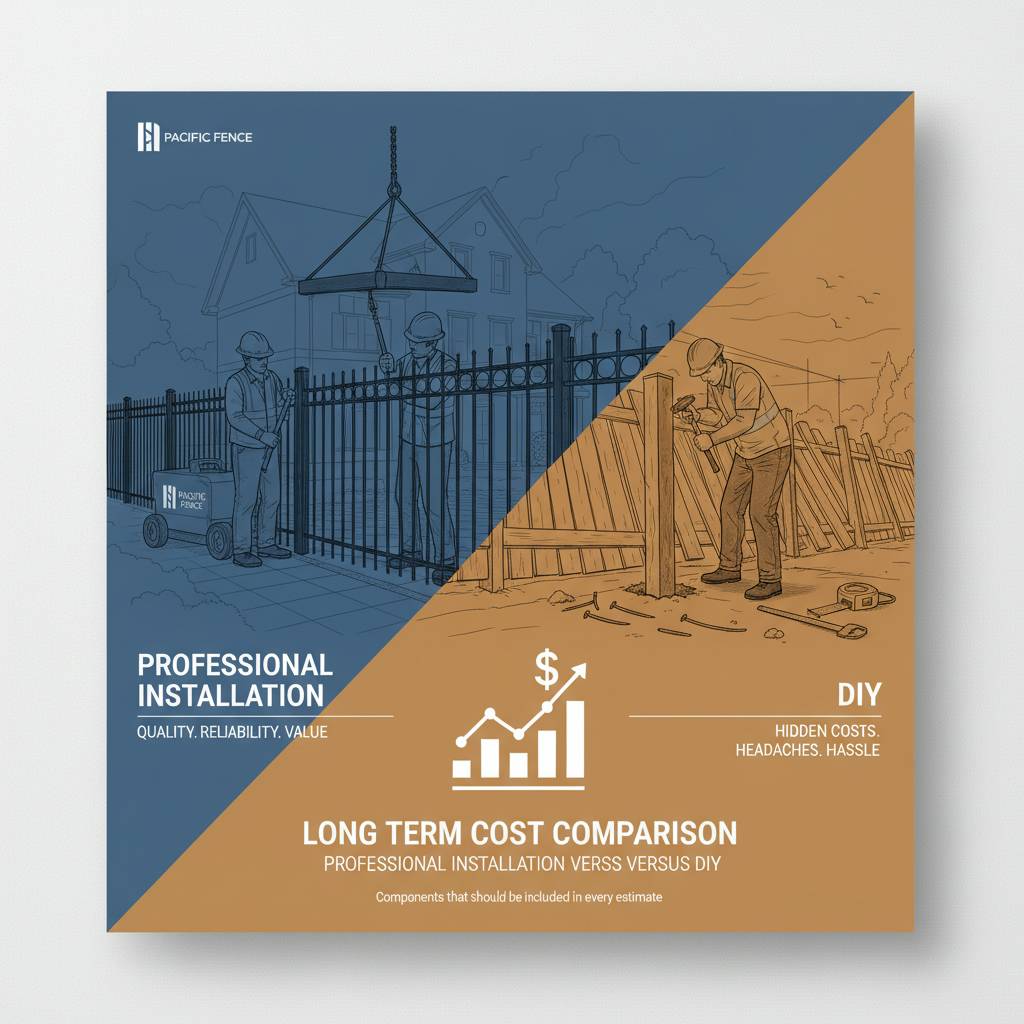 A comprehensive estimate includes several categories commonly missed by DIYers. These include the initial materials and labor, permit and inspection fees, preventive maintenance schedules, typical repair intervals and average repair costs, expected system lifespan, and potential downtime or loss of use. Including these items ensures apples-to-apples comparison between professional installation and DIY approaches.
Key line items to request in a side-by-side estimate:
- Initial materials and labor
- Permit, inspection, and compliance costs
- Routine maintenance (annual, biannual) and service fees
- Average repair costs over 5-15 years
- Estimated useful life and replacement timing
- Liability, warranty coverage, and insurance implications
When reviewing estimates from Pacific fence, you will see these categories clearly broken out and quantified. That transparency allows you to identify where apparent savings from a DIY approach may evaporate after one or two unplanned repairs or when a burned-out component shortens the system's lifespan.
Common hidden costs of DIY that clients overlook
DIY projects can be rewarding and economical for small tasks, but for larger systems the hidden costs mount quickly. Commonly overlooked expenses include the cost of specialized tools, the learning curve and time invested, mistakes that require rework, higher energy bills from improper installation, and the lack of transferable warranties. Each of these factors can turn a cheap initial job into a costly ongoing problem.
Repair bills for mistakes are often higher than professional labor because damage can cascade into other components. For example, a poorly sealed roof can cause water damage leading to mold remediation costs that range from $75-$200 per square foot in affected areas, whereas a properly installed roof reduces the likelihood of such failures and often comes with a workmanship warranty to limit future exposure.
Insurance and compliance are additional risks. Insurance claims may be denied if work was unpermitted or not performed to code, and resale value can suffer if buyers discover non-permitted DIY work. A professional job documented with permits and records offers both legal protection and market confidence when selling the property.
Case studies and comparison examples
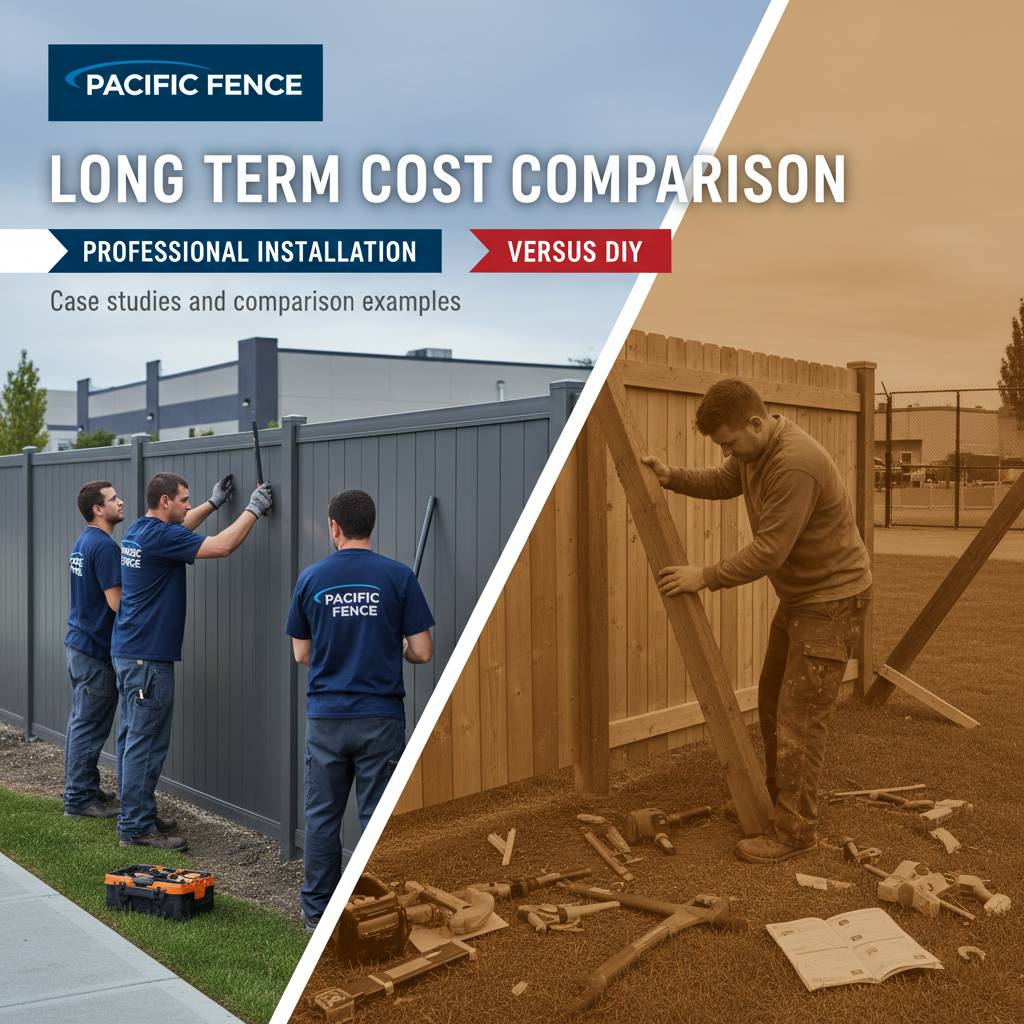 Concrete examples illustrate why long-term comparisons matter. A mid-range HVAC installation performed professionally might cost $4,000-$8,000 upfront with a 10-year warranty and recommended maintenance of $150-$300 annually. A DIY approach using a lower-cost unit or partial installation could save money initially but may incur $500-$2,000 in early repairs, higher monthly energy bills, and earlier replacement, erasing any initial savings within several years.
Consider a kitchen remodel: professional cabinetry and plumbing can extend functional life by 15-20 years. DIY cabinet refacing or improvised plumbing may seem affordable but often results in recurring adjustments and repairs. A typical professional kitchen plumbing repair might be $200-$600, whereas repeated DIY fixes and eventual professional intervention can total more than the original installation would have.
| Category | Professional Installation | DIY |
|---|---|---|
| Initial Cost | $4,000-$8,000 (example HVAC) | $1,500-$4,000 |
| Annual Maintenance | $150-$300, included or reduced with service plan | $0-$150 (if performed, often neglected) |
| Expected Major Repair Over 10 Years | $200-$1,200 (covered in part by warranty) | $500-$3,000 |
| Service Life | 10-15 years with proper maintenance | 5-10 years, variable |
| Resale / Documentation Value | Higher with permits and warranties | Lower, potential buyer concern |
Tables like this make the financial trade-offs explicit. Pacific fence uses real-world inputs and local pricing to produce estimates tailored to your property, helping you evaluate the full cost picture rather than guessing which option is cheaper long term.
How to calculate return on investment and compare scenarios
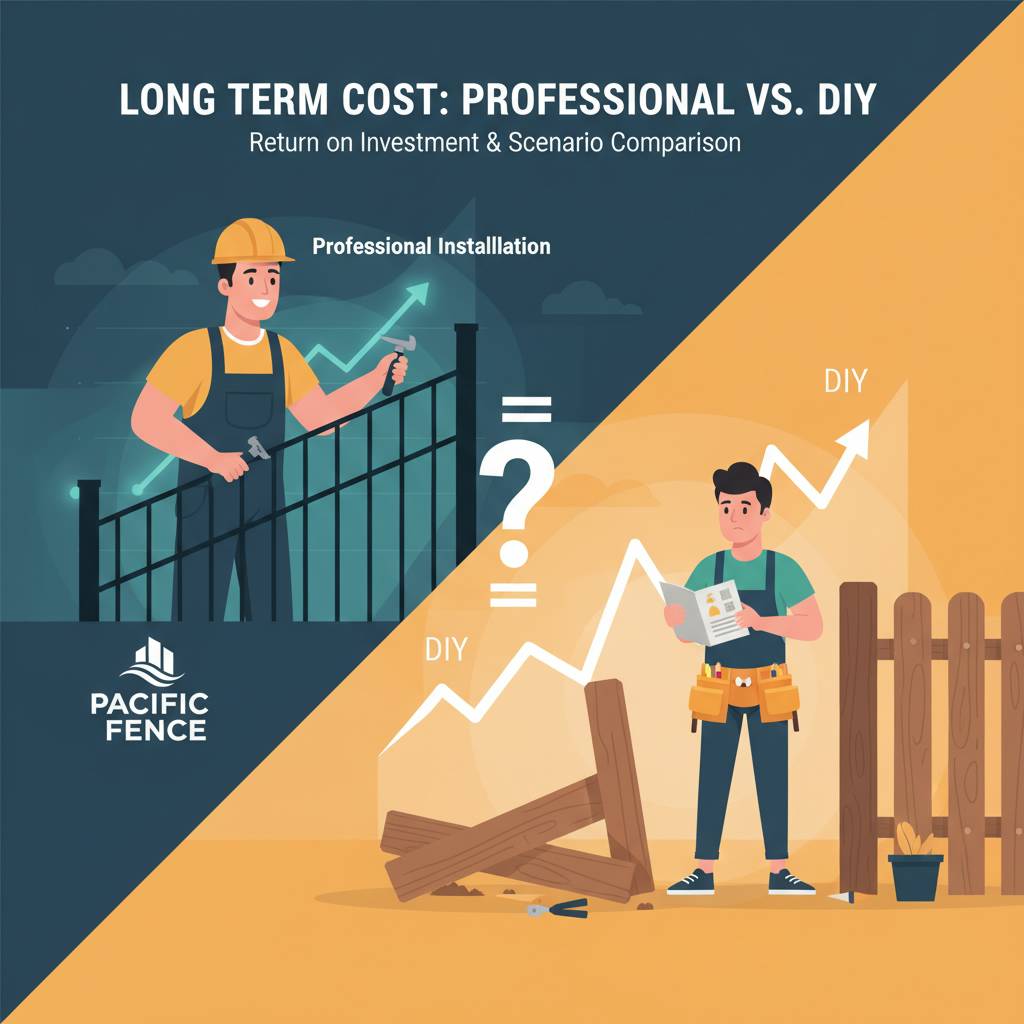 Start by listing all costs for each scenario across a consistent time horizon-commonly 5, 10, or 20 years. Include initial investment, expected maintenance, typical repair costs and frequency, expected life span, and opportunity costs like downtime or lost rental income. Discount future costs if you want a present-value analysis, though a straightforward cumulative-cost comparison often provides clear insight for homeowners.
A practical step list for a decision-ready comparison:
- Define the comparison horizon (e.g., 10 years)
- Itemize all initial and recurring costs for both professional and DIY approaches
- Estimate repair frequency and typical repair cost ranges
- Factor in warranty coverage and insurance implications
- Consider non-financial benefits such as safety, time savings, and documentation
- Sum cumulative costs and assess which option offers better value over the chosen horizon
When you run these numbers, professional installation frequently shows a lower total cost of ownership after accounting for fewer repairs, better energy efficiency, and warranty protection. In marginal cases, the choice might depend on your tolerance for risk and personal time, which is why Pacific fence always presents sensitivity ranges so you understand how outcomes change based on different assumptions.
Why professional work delivers measurable savings over time
Professional contractors bring training, experience, standards, and access to quality materials that reduce failure rates and extend useful life. A professionally installed system is more likely to meet energy performance standards and regulatory codes, translating into lower operating costs and fewer forced repairs. These benefits compound year after year and are especially important in large investments where the cost of failure is high.
Warranties, service contracts, and documented records are practical advantages that protect homeowners financially. When a contractor provides a workmanship warranty and a manufacturer warranty is maintained through proper installation, future claims are simpler and often covered. This safety net effectively transfers risk away from the homeowner, which is a tangible monetary value when compared side-by-side with DIY risk retention.
Customers working with Pacific fence benefit from transparent contracts and scheduled maintenance options that reduce surprise expenses. By showing the total cost of ownership and demonstrating predictable maintenance plans, Pacific fence helps clients plan budgets, avoid emergency replacements, and realize long-term savings that a simple upfront price comparison would miss.
Frequently asked questions and common concerns

Will professional installation always cost less over time?
Not always, but often. For small, low-risk projects with simple outcomes, a DIY approach can be cheaper overall. For complex systems-electrical, HVAC, roofing, structural changes-the added durability, warranty coverage, and reduced repair frequency of professional work usually produce a lower total cost of ownership. A careful long term cost comparison will reveal whether professional installation is the better financial choice for your specific project.
How does Pacific fence estimate future repair costs?
Pacific fence uses historical data, manufacturer lifespans, local climate and usage patterns, and contractor experience to estimate repair frequencies and costs. Estimates are presented as ranges to reflect uncertainty. That approach allows homeowners to see best-case, expected, and worst-case scenarios and decide based on risk tolerance and budget priorities.
If I save money now with DIY, how can I avoid future problems?
If you choose a DIY route, be proactive: follow manufacturer instructions precisely, purchase quality materials, maintain detailed records, and schedule periodic professional inspections. Even then, understand that warranties may be limited and resale concerns may arise. For many homeowners, an annual inspection or service plan from a licensed contractor is a sensible compromise that limits long-term risk while preserving some upfront savings.
Next steps: getting an accurate side-by-side estimate
To make an informed decision, request a detailed side-by-side estimate that explicitly includes initial installation, permits, recommended maintenance, likely repairs, and expected replacement timelines. Pacific fence prepares these estimates with clear line items and scenario analysis to illuminate true costs over your chosen time horizon. We tailor assumptions to local labor rates, climate conditions, and product availability to ensure realistic comparisons.
We encourage you to collect at least two professional estimates and a realistic DIY plan if you are considering doing the work yourself. Compare the cumulative costs, warranty terms, and risk exposure. If helpful, from our team can walk you through the comparison and explain where savings are most robust and where DIY creates long-term liabilities.
Ready to see a customized comparison for your project? Contact Pacific fence at 13466814020 to request a side-by-side estimate. We will explain assumptions, answer questions, and show how professional work can produce measurable savings over time.
Call now: 13466814020 - speak with Pacific fence and get the full financial picture before you decide.