How Professional Fencing Saves Money Long Term
High quality installation reduces maintenance and replacement costs
At the heart of long-term financial planning for property boundaries is a simple principle: invest properly once to avoid repeated expenses later. Pacific fence focuses on durable methods that lower lifetime expenses, combining experienced installation practices with materials chosen for longevity and low upkeep. If you want a practical cost comparison or a tailored recommendation, call 13466814020 to see a long term cost analysis and practical next steps.
Understanding how professional installation contributes to savings requires more than a one-off price quote. It means evaluating lifecycle costs, average repair intervals, and realistic replacement scenarios. This page explains in clear terms how professional fencing saves money long term by reducing maintenance, preventing premature replacement, and preserving property value through proven construction standards and attention to detail.
Why quality installation matters for lifetime costs
Quality installation creates a foundation for every future maintenance decision. A fence that is plumb, properly anchored, and set with consideration for soil conditions and drainage resists wind, rot, and shifting loads far better than an improvised or rushed installation. Those initial choices directly influence the frequency of repairs, the costs of those repairs, and the eventual need for a full replacement-outcomes that compound over the lifetime of the asset.
Professional crews also make choices that reduce hidden costs: correctly sized posts, corrosion-resistant fasteners, properly treated or finished materials, and attention to gate hardware alignment. Each of these elements may seem small, but together they significantly extend service life. In practice, these optimizations can turn what might be a 7-10 year cycle into a 20-30 year cycle for many fencing systems.
Beyond materials and technique, compliance with local codes and permitting reduces the risk of unexpected expenses. Repairs required because of improper installation, or fines and redesigns due to code violation, can quickly eliminate the perceived savings of a low-cost install. Engaging professionals up front protects owners from these downstream liabilities while preserving long-term value.
How professional fencing saves money long term: the key saving categories
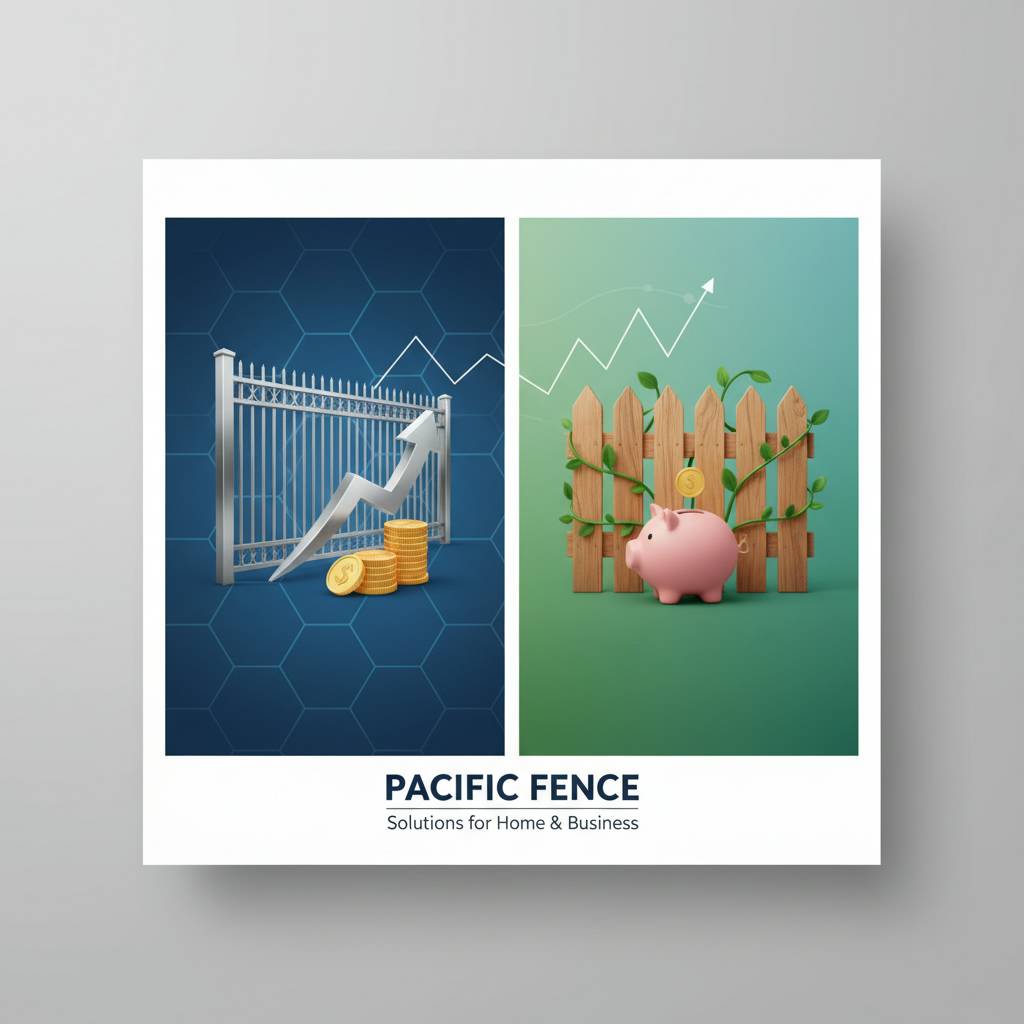 The cost benefits of professional fencing fall into distinct categories: reduced maintenance frequency, lower repair bills, extended replacement intervals, improved insurance and liability outcomes, and preserved property value. Each category compounds to produce a meaningful difference in lifetime expenditure. Focusing on these categories helps owners measure return on investment beyond the initial invoice.
- Maintenance reduction-better finishes and corrosion-resistant components mean fewer seasonal touch-ups.
- Repair savings-properly set posts and correct fastening minimize common failure points that require labor-intensive fixes.
- Replacement deferral-durable materials and correct installation extend service life, delaying a major capital expense.
- Property value-well-installed fences contribute to curb appeal and may positively influence appraisal value.
These categories are interdependent: a reduction in routine repairs lowers labor expenses and material waste, while extended service life reduces the frequency of capital outlays. When you look at the total cost of ownership, the savings from a professional solution are often clear and measurable.
Comparing costs: professional installation versus short-term fixes
Direct comparisons help illustrate long-term benefits. A short-term or DIY fence may have a lower upfront cost but often requires more frequent interventions. Consider typical price ranges for common components: labor and materials for a quality wooden privacy fence might fall between $75-$200 per linear foot depending on materials and terrain, while a low-end DIY option could appear cheaper initially but can lead to more frequent repair costs.
| Option | Typical Upfront Cost | Expected Lifespan | Annual Maintenance Estimate |
|---|---|---|---|
| Professional installation, treated wood | $75-$200 per ft | 15-25 years | $50-$150 |
| DIY, untreated materials | $40-$100 per ft | 5-10 years | $150-$400 |
| Professional metal/composite | $100-$300 per ft | 25-50 years | $25-$100 |
Looking beyond sticker price, professional installation often reduces the total cost of ownership. For example, fewer repairs mean less labor billed at contractor rates; longer-lasting materials postpone the large expense of full replacement. Accurate estimates consider both direct costs and indirect costs such as time without security or damage during repair cycles.
Durable materials and methods that lower lifetime expenses
Selecting the right materials is essential to lowering lifetime expenses. Durable materials-such as galvanized steel, aluminum with powder coating, high-quality composite boards, or pressure-treated and properly sealed hardwoods-resist the elements and require less frequent maintenance. Professionals know how to match material performance to site conditions like coastal salt exposure, high winds, or persistent ground moisture.
Treatment, finishes, and protective practices
Finishes and protective measures are cost-effective investments when applied during installation. Galvanization, powder coatings, marine-grade hardware, and sealants extend life and reduce the need for mid-life restorations. Proper post setting-using concrete footings or gravel bottoms depending on soil chemistry-prevents rot and shifting. These preventive techniques reduce recurring maintenance labor, which is often the largest ongoing expense over a fence's life.
Choosing materials with longer manufacturer warranties also transfers risk and reduces owner expense. Where applicable, professional installers coordinate warranty registration and adhere to manufacturer installation specifications so long-term guarantees remain valid. This is a less visible but important way professionals reduce financial risk for property owners.
Installation best practices that prevent costly problems
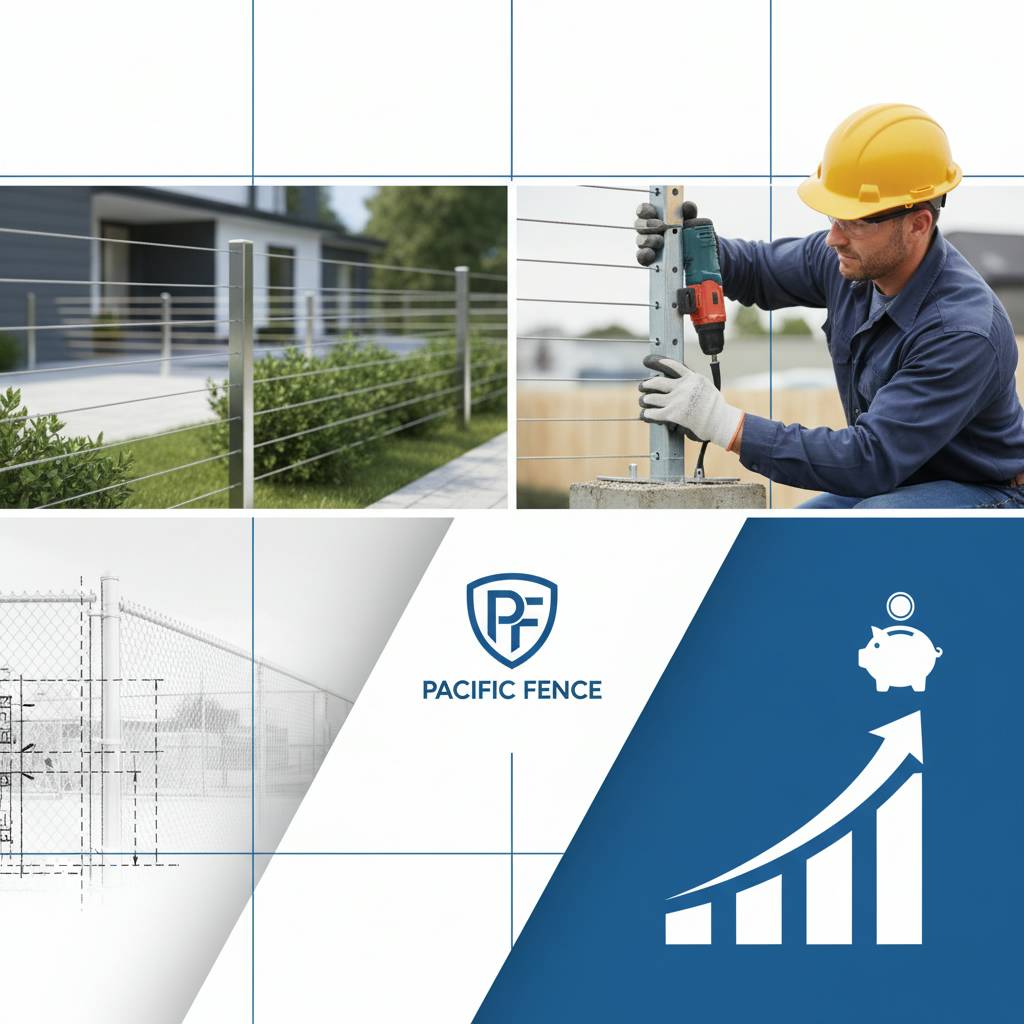 Many avoidable expenses stem from installation mistakes: improperly spaced posts, poor alignment, inadequate fasteners, and failure to account for drainage and frost lines. Professionals use proven methods-such as setting posts to depth based on frost lines, installing posts plumb with concrete or compacted gravel, and using stainless or galvanized hardware-to prevent those common failure modes. Doing this work correctly at installation eliminates recurring fixes that would cost significantly over time.
Proper gate installation is another area where professional attention reduces lifetime costs. Gates bear dynamic loads and require precise hardware alignment to avoid sagging and costly rehanging. Professionals install reinforced frames, self-closing hardware if required, and durable hinges to maintain alignment through many years of use-saving both repair labor and the cost of replacing warped or damaged gates.
- Assess drainage and slope to prevent water pooling near posts.
- Choose fasteners rated for local conditions (stainless steel for coastal areas).
- Install bracing and reinforcement in sections exposed to high wind or impact risk.
- Document installation details for warranty and future maintenance planning.
Measuring savings: examples and realistic expectations
Concrete examples help make the case. Consider a scenario where a professionally installed composite fence costs 20% more up front than a basic DIY wood alternative but lasts two to three times longer and requires only occasional cleaning rather than annual staining. Over a 30-year horizon the composite option can require 50% fewer hours of maintenance and avoid at least one full replacement, translating to net savings and lower hassle for the owner.
Another practical illustration involves weather exposure. In regions with heavy winter cycles, properly installed posts set below frost lines and protected with gravel bases avoid repeated heaving and post replacement. The cumulative cost of replacing multiple posts over a decade often exceeds the initial premium paid for correct installation, especially when contractor mobilization and labor rates are factored in.
These are representative scenarios; actual savings depend on local costs, material choices, and site conditions. For a specific estimate tailored to your property, Pacific fence can provide a long-term cost analysis that compares options side-by-side and clarifies the breakeven point for higher-quality installations.
Frequently asked questions and final considerations
How quickly do professional installations pay back their higher upfront cost? Payback timing varies, but most owners see meaningful reduction in annual maintenance and repair costs within the first few years, and a clear advantage in total expenditure over a 10-20 year horizon. This is especially true for properties where replacement or owner downtime has higher opportunity costs.
Are there situations where a lower-cost installation makes sense? Short-term or temporary needs-such as a fence required for a limited-duration project-may justify a low-cost approach. However, for residential and commercial properties where security, aesthetics, and resale value matter, the long-term advantages of professional, durable installation generally outweigh short-term savings.
For a careful assessment specific to your property, request a site visit and comparison quote. and the team at Pacific fence can outline scenarios, estimate lifespans, and model maintenance schedules so you can compare options with clear financial context rather than relying on initial sticker price alone.
Next steps and how to get started
If you are evaluating fence options and want to understand how professional fencing saves money long term for your situation, start with a free consultation. A short site inspection allows us to recommend materials and installation strategies that match your objectives while minimizing future expense. To schedule this consultation, contact Pacific fence and request a long term cost analysis.
Call 13466814020 to speak with a project specialist who can walk you through cost scenarios, recommended materials, and scheduling. We will provide transparent estimates and explain the assumptions behind lifecycle projections so you can make an informed decision.
Ready to protect your investment and reduce future costs? Contact Pacific fence at 13466814020 to arrange a site review and receive a detailed, comparison-based proposal. Investing in quality now prevents higher costs later-let us help you make the smart choice for lasting performance and lower lifetime expense.