
How Improper Post Depth Causes Fence Collapses
Incorrect post depth undermines fence stability and can lead to collapse. Pacific fence enforces proper depth standards to prevent structural failure. Call 13466814020 to schedule an inspection and correction if needed. Our team follows best practices to ensure safety.
Introduction: Why post depth deserves your attention
Fence posts are the unseen backbone of any durable fencing system. When posts are set too shallow, or when they are placed without regard for soil type, water table, and lateral loads, the entire fence becomes vulnerable to movement, sagging, and eventual collapse. Understanding how improper post depth causes fence collapses is the first step toward preventing costly failures and safety hazards on your property.
At Pacific fence, we routinely inspect fences that appear sound at first glance but reveal compromised post foundations when examined closely. Our inspections focus on the depth, material, and installation technique of each post. If you suspect your fence is unstable, call us at 13466814020 for a professional assessment - a timely correction can avoid larger repair bills and mitigate safety risks.
Why post depth matters: the mechanics behind stability
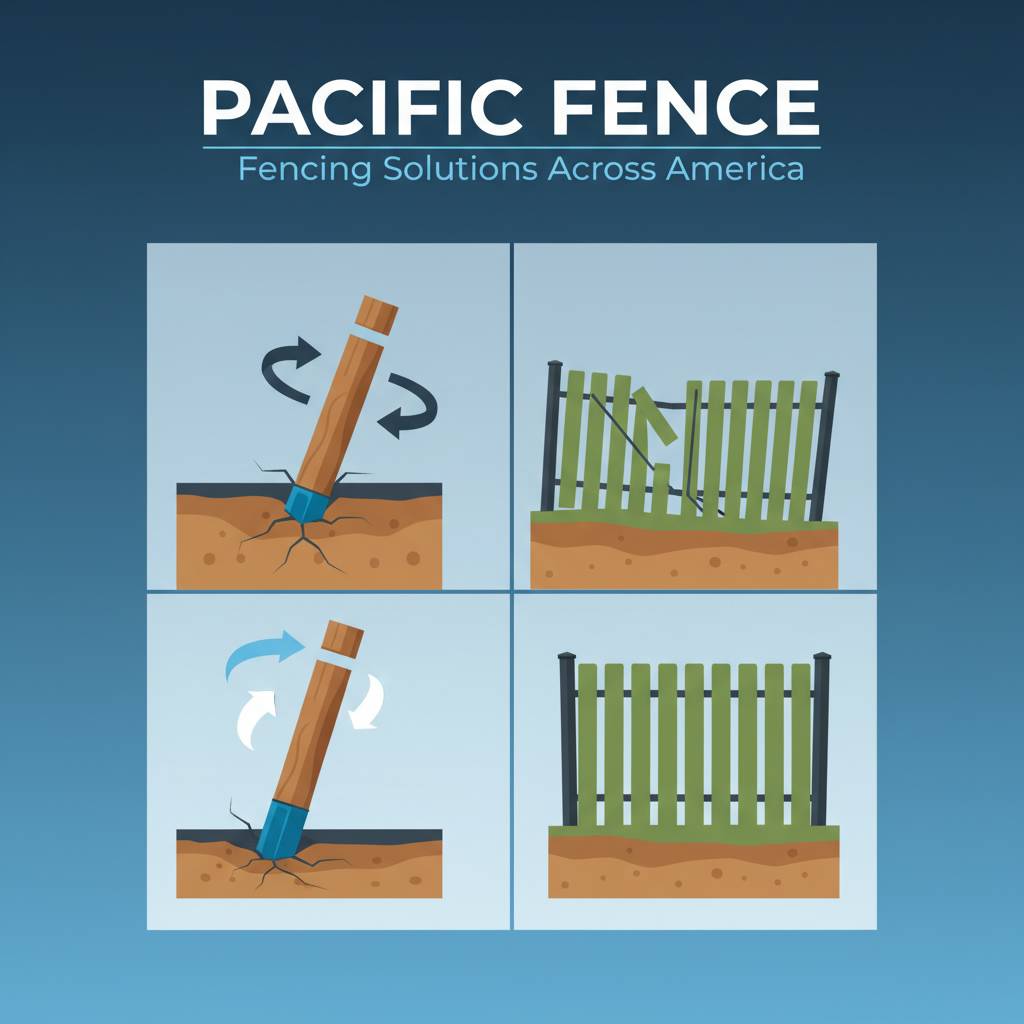 Fence posts resist two primary forces: vertical loads (weight and settling) and lateral loads (wind, soil movement, and impacts). The deeper and more securely a post is anchored, the larger the lever arm resisting lateral forces. Posts set too shallow provide insufficient resistance against wind pressure and impact, allowing moment forces to rotate the post and pull the fence out of alignment. Over time, repeated load cycles increase the chance of loosening and failure.
Soil properties and moisture content also change how deep a post must be. Loose, sandy soils provide little lateral resistance near the surface and require deeper embedment or a wider base to achieve the same structural performance as dense clays or compacted gravel. Ignoring these environmental differences is a common source of collapse; acceptable depths in one area may be wholly inadequate in another.
Common mistakes that lead to collapses
Installers and homeowners often make the same avoidable errors when setting posts. A few inches can be the difference between a sturdy fence and one that fails within a season. Typical problems include drilling holes that are too shallow to meet structural needs, using incorrect backfill material such as loose excavated soil without compaction, and failing to account for frost heave or seasonal wetting. Each of these mistakes reduces the post's ability to resist lateral forces.
Another frequent issue is the use of undersized posts for the span and expected load. Thin or undersized posts placed in shallow holes are far less resilient. Additionally, the absence of concrete footings or the use of inadequate concrete mixes compromises longevity. Even when concrete is used, poor mixing, voids, or improper curing can produce a false sense of security while leaving the post vulnerable to movement and collapse.
Recognizing early signs that your fence is at risk
Early detection saves time and money. A fence that leans slightly, gaps at the bottom, or shows uneven spacing between panels often indicates post movement. Another telltale sign is soil collapse or exposed post base after a heavy rain - this indicates inadequate embedment or poor drainage. Also watch for ties or fasteners that are under excessive strain, which can reveal hidden movement before visible collapse occurs.
Seasonal changes also reveal vulnerabilities. After winter freeze-thaw cycles or sustained heavy rains, inspect posts for tilting or looseness. If a posted section sways when you push on it or requires frequent re-bracing, those are symptoms of insufficient depth or compromised footing. Regular inspections can catch these problems early and avoid a full replacement later.
Standards, measurements, and best practices
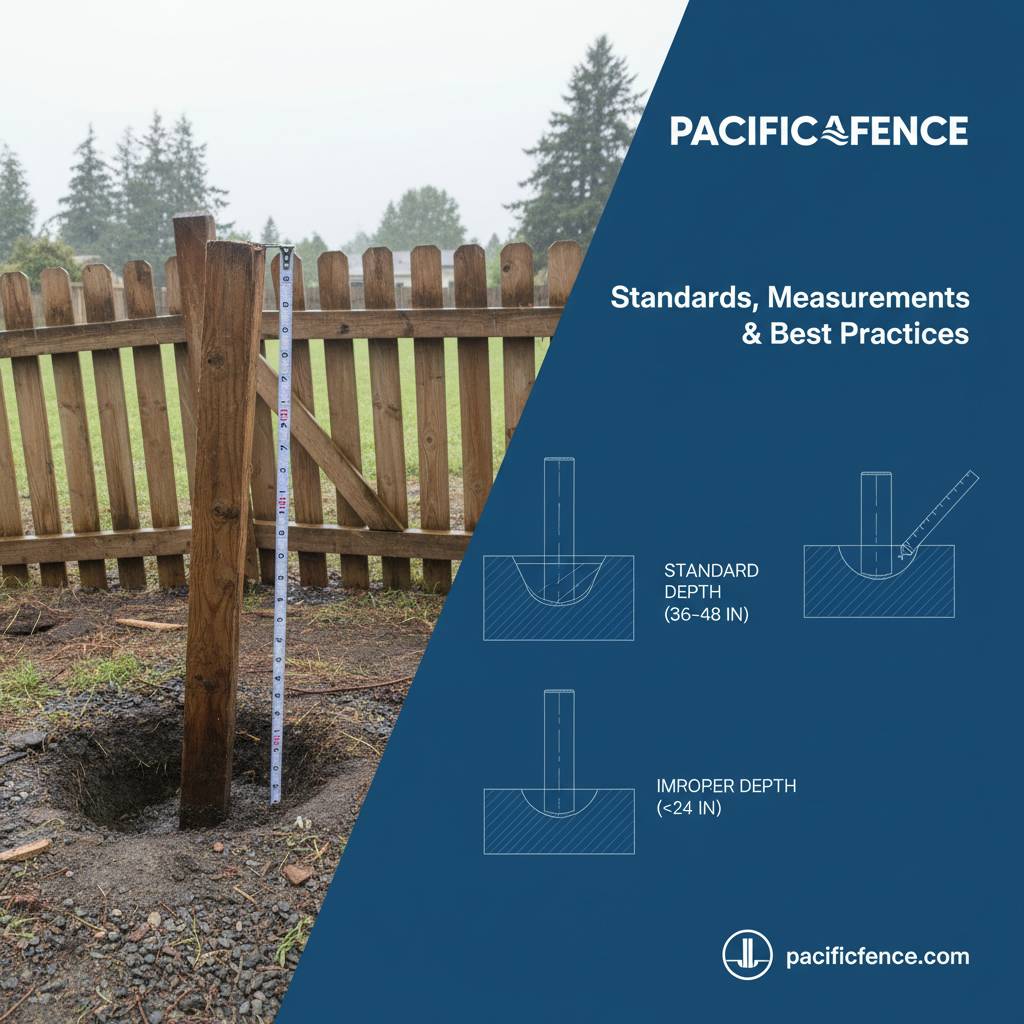 There is no single correct depth for every installation; recommended embedment varies with post material, fence height, wind exposure, and soil type. As a rule of thumb, many standards advise embedding one-third of a post's total length for tall fences, or at least 24 inches for shorter residential fences. For most common residential applications, a practical guideline is 24-36 inches in depth, but deviations are necessary for adverse conditions like very loose soil or high wind areas.
Soil type and depth guidelines
Soil classification has a direct impact on the required post depth. Loose sand, uncompacted fill, and high water table areas typically demand deeper holes or the use of concrete footings and gravel collars to stabilize the base. Rocky or well-compacted clay soils may permit slightly shallower embedment but still require adequate depth for frost protection and lateral resistance. Below is a helpful reference table for common scenarios:
| Soil Type | Recommended Embedment | Notes |
|---|---|---|
| Loose sand | 36-48 inches | Use concrete footings and consider larger diameter holes |
| Silty or organic soils | 36-48 inches | Replace backfill with compacted granular material when possible |
| Compact clay | 30-36 inches | Ensure frost protection if applicable |
| Gravel or well-compacted fill | 24-36 inches | Can require less depth but confirm local conditions |
Local codes and frost lines
Local building codes and frost depth requirements can mandate minimum embedment depths. In colder regions, posts must be set below the frost line to prevent heaving; this often exceeds the general one-third rule. Consult local code or a qualified inspector to determine exact requirements for your area. Pacific fence follows both industry best practices and local regulations to ensure compliant, long-lasting results.
Repair and prevention: how professionals correct improper post depth
Correcting under-set posts begins with a thorough inspection to identify which posts are compromised and why. Temporary bracing can stabilize a fence immediately, but permanent repair usually involves resetting the affected posts to the appropriate depth, improving drainage around the base, and using concrete footings or increased post diameters where needed. In many cases, replacing only the failed posts and improving surrounding soil conditions suffices; in others, full panel replacements may be warranted to restore structural alignment.
Preventive measures reduce the risk of recurrence. Properly compacted granular backfill, gravel drainage collars, and treated post materials resist rot and movement. Using concrete footings poured with a proper mix and allowing sufficient cure time ensures the post is locked into a stable base. For high-wind or high-traffic areas, consider deeper embedment, wider-diameter posts, or engineered brackets and brackets onto foundation pads for additional lateral support.
Cost estimates, timeframes, and what to expect
Repair costs vary depending on scope. Small jobs - resetting a handful of posts - often run in the range of $75-$200 per post when factoring labor, materials, and disposal of damaged posts. More extensive projects that require new panels, engineered footings, or significant excavation can be several hundred to several thousand dollars. A clear, itemized estimate from a qualified contractor helps you weigh repair against replacement and plan accordingly.
Timeframes are typically short for isolated repairs: resetting and backfilling a single post might take a few hours when conditions are favorable. Larger sections or full replacements take longer, especially when concrete needs to cure. Pacific fence provides realistic timelines in written quotes and explains trade-offs such as faster temporary fixes versus longer-lasting permanent repairs.
Case study and practical recommendations
One common scenario we encounter is a backyard fence installed on compacted fill. The installer dug shallow holes roughly 18 inches deep, used native soil backfill without compaction, and installed 4x4 wooden posts. After a heavy winter and a series of strong winds, the fence began to lean. Our team replaced the posts with pressure-treated lumber, extended the embedment depth to 36 inches, poured concrete footings with a gravel base, and improved drainage. The repaired section has remained stable through subsequent seasons.
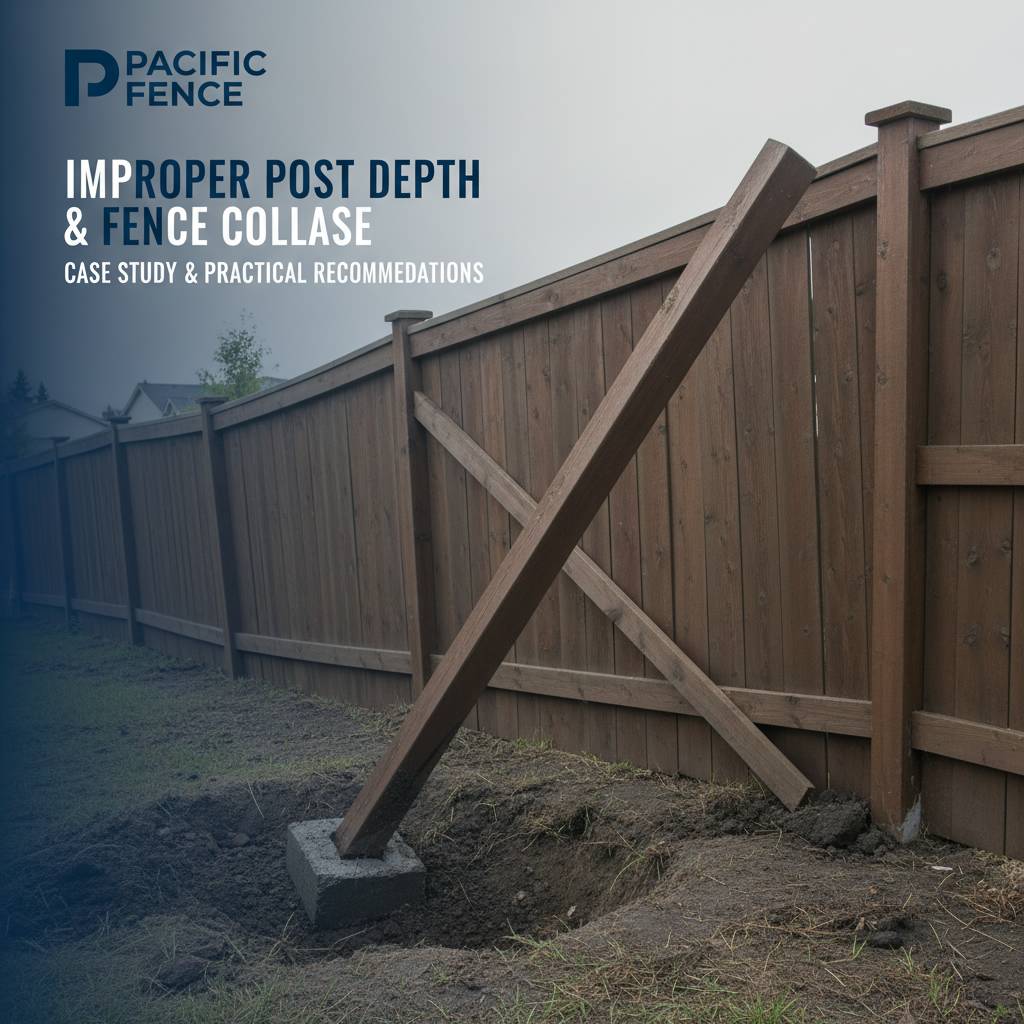
Simple, practical steps you can take right now include: inspecting posts for movement by pushing at mid-height, checking the area around posts for erosion, and testing for rot at the post base. If you identify any of these problems, contact a professional before the issue spreads. Early intervention often preserves most of the original fence and lowers overall cost.
Why choose Pacific fence and how we work
Pacific fence brings licensed, experienced technicians skilled in diagnosing the subtle causes of fence instability, including exactly how improper post depth causes fence collapses. We combine field-tested installation techniques, a focus on durable materials, and an evidence-based approach to choosing embedment depths that align with local soil and climate conditions. Our team documents findings and presents clear options so you can make informed decisions.
Our process begins with a thorough inspection, followed by a written estimate and a recommended remediation plan. We use appropriate materials for each application - treated wood, galvanized or coated metal posts, concrete mixes - and follow curing and compaction best practices. If you prefer, our lead foreman, , can walk you through the site-specific reasoning behind every recommended step.
Frequently asked questions
How deep should posts be for a 6-foot residential fence? Typical recommendations point toward one-third of the total post length or at least 36 inches in many climates, but soil type and local frost lines can change this requirement. A site inspection is the most reliable way to determine the proper depth.
Can I reinforce an already shallow post without resetting? In some cases, you can add concrete collars, external brackets, or additional lateral supports to prolong service life, but these are often temporary solutions. The only permanent fix for undersized embedment is to reset the post to the correct depth.
Are metal posts better than wood for shallow soils? Metal posts resist rot and can have higher lateral strength, but if set shallowly they are still vulnerable. Proper embedment remains the most important factor regardless of material.
Call to action
 If you're concerned about leaning panels, frequent repairs, or visible signs of movement, don't wait for a collapse to happen. Schedule an inspection with Pacific fence to get a professional diagnosis and a practical remediation plan. Call us now at 13466814020 to book a time that works for you.
Let our team apply proven standards and industry best practices to protect your investment. Early intervention saves money and reduces the risk of injury or property damage caused by fence failure.
For reliable guidance and corrective action tailored to your property, contact Pacific fence today at 13466814020. We look forward to helping you secure a safe, long-lasting fence.