
Hidden Costs To Watch For In Fence Projects
Unexpected costs can derail a fence budget and delay the project. Pacific fence identifies potential hidden charges during the planning stage. Call 13466814020 to get a detailed estimate that covers common extras. We help you avoid surprises and stay on budget.
Why hidden costs matter: a quick reality check
When you plan a fence installation, the line item that jumps out is usually the material and labor. That obvious part is only the beginning. Hidden costs can quietly add hundreds or even thousands of dollars to a job, and they often appear after contracts are signed. Knowing what to watch for early saves time, prevents conflict, and keeps your project on schedule.
At Pacific fence, we see the same patterns: permits, unexpected site conditions, neighbor disputes, access constraints, and last-minute material upgrades. These are not abstract possibilities; they are real issues that change timelines and budgets. We encourage homeowners and property managers to ask targeted questions before signing so that surprises are minimized.
Common hidden costs to watch for in fence projects
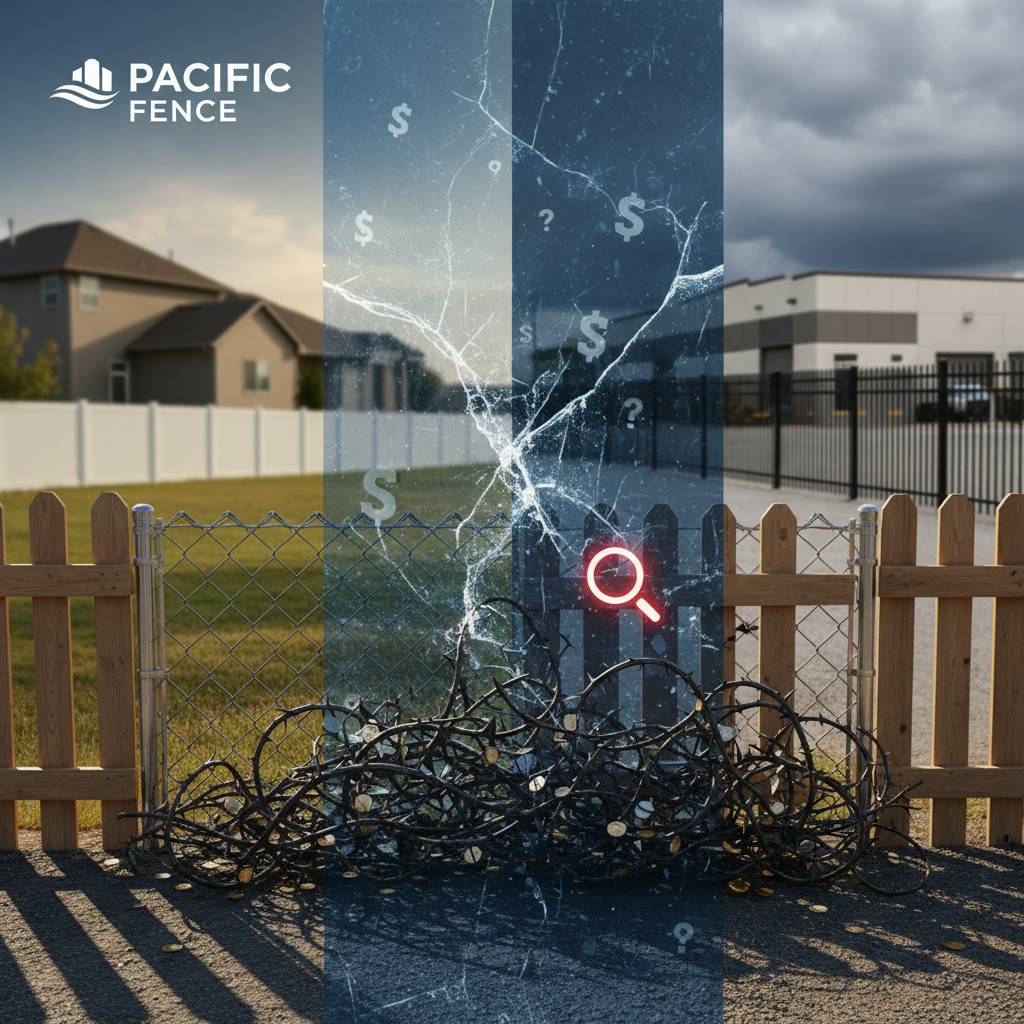 There are a handful of recurring extras that show up across most fence projects. Thinking through these ahead of time helps you create a realistic contingency and reduces stress. This section outlines the most frequent hidden costs to watch for in fence projects and why each one matters to your final invoice and schedule.
- Permits and inspection fees: Local governments often require permits. Even when a permit seems unnecessary, inspections or zoning reviews can lead to additional compliance work.
- Utility locating and marking: Hitting an underground line can be catastrophic. Professional locating is sometimes billed separately and can range depending on the utility situation.
- Site preparation: Clearing overgrown vegetation, removing old posts, and leveling grade can take more time and money than anticipated.
- Material substitutions and upgrades: If a chosen material is out of stock, or you decide to upgrade for durability or aesthetics, this will change the cost.
- Neighbor boundary and access issues: Resolving ownership questions or limited access to portions of the property may require additional coordination or legal work.
Each of these items is routine, but they compound quickly. When you ask a contractor for an estimate, request a breakdown that separately lists these potential extras so you can compare bids on an apples-to-apples basis.
Site and permitting surprises: what you should inspect before quoting
Before a contractor gives a fixed quote, a careful site visit can reveal many of the issues that become hidden costs. Evaluate tree roots, slope changes, drainage, and existing structures. Ask for a visual walk-through with your estimator and request photographs or video tied to the written estimate. That paper trail will help avoid disputes if the crew later finds something unexpected.
Permitting is another frequent source of delays and added expense. Even if your municipality seems lenient, rules change and inspectors vary. A permit may call for specific post depths, materials, or setbacks; complying with those requirements can add time and expense. Also be aware that some areas require neighbor notification or HOA approval, which can introduce additional steps.
Practical tips for the site assessment
When scheduling that first visit, provide the contractor with as much information as possible: property surveys, HOA guidelines, utility maps, and photos of problematic areas. If you have a recent survey, point out the exact property corners. If you don't, consider ordering a survey if your project crosses boundaries-this preemptive step often prevents expensive legal or rework costs later.
Material and installation extras that drive up the price
Materials carry obvious price differences, but there are secondary costs tied to the choices you make. For example, composite boards resist rot and reduce long-term maintenance but often come with higher upfront costs and, in some regions, limited supplier availability that can extend lead times. Similarly, ornamental metal requires special post anchors and welding work that increase labor intensity and cost.
Labor rates vary with complexity. A flat, easy-to-access backyard is faster to fence than a steep hillside or a yard with multiple levels. Custom gates, lattice work, and decorative finishes add time and demand more experienced tradespeople. When labor increases, so does the chance of unexpected charges from overtime, additional crew members, or specialty subcontractors.
Comparison table: typical extra items and expected price ranges
| Extra item | Typical added cost | Why it happens |
|---|---|---|
| Permits and inspections | $75-$200 | Municipal fees and required inspections can be billed separately from labor. |
| Utility locating | $50-$250 | Professional locating to prevent damage to gas, electric, or fiber lines. |
| Old fence or stump removal | $150-$600 | Removing old posts, concrete, or roots requires digging and hauling. |
| Custom gates and hardware | $200-$2,000 | Gate size, automation, and heavy-duty hardware greatly affect price. |
| Grading and drainage adjustments | $300-$1,500 | Addressing slope issues or improving drainage to prevent future failures. |
These ranges are illustrative and depend on local labor markets, material availability, and site complexity. Use them to build a contingency-typically 10%-15% of the base estimate is a prudent starting point for common extras.
Unforeseen repairs, replacements, and archaeology of the yard
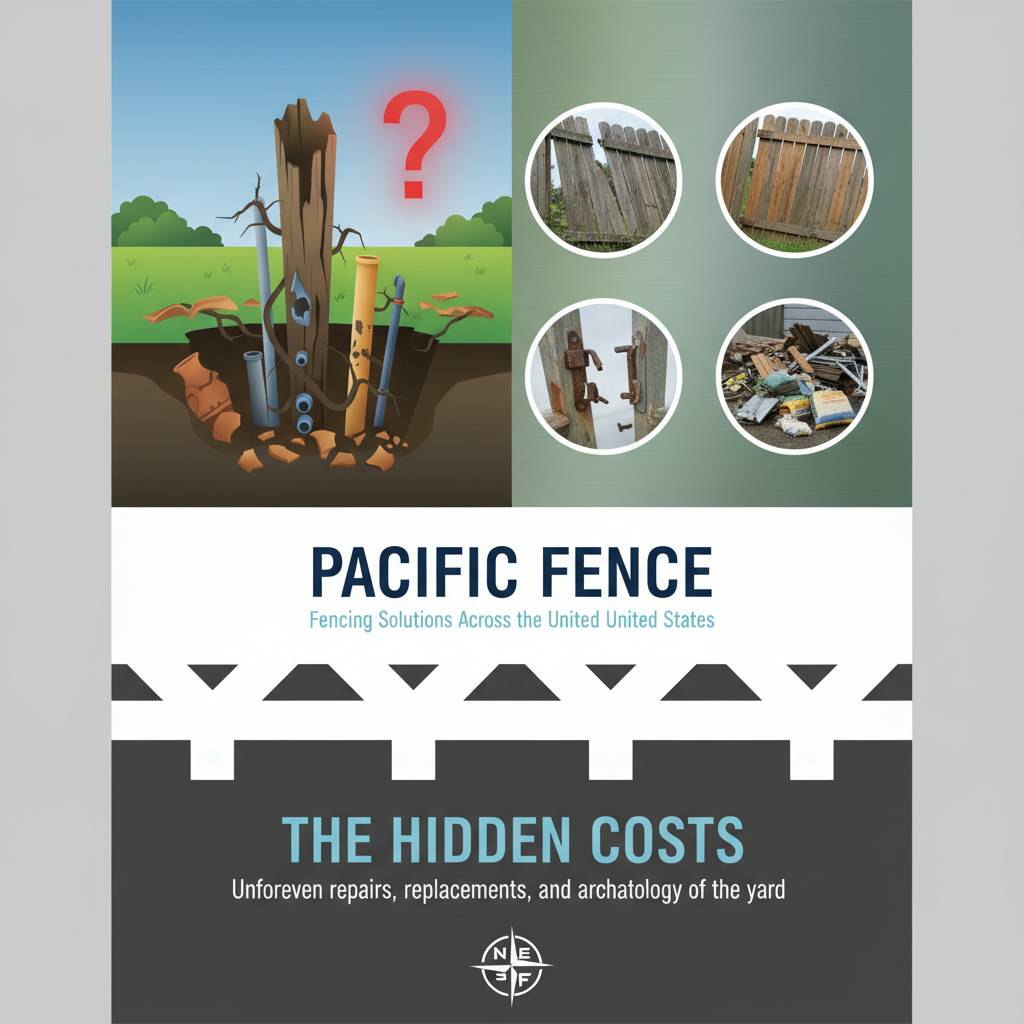 Homes with long histories tend to hold surprises beneath the surface. You might encounter buried concrete footings, old irrigation systems, or remnants of structures that require removal. Each discovery adds time and cost. In older neighborhoods, it is not uncommon to have to replace posts that are set in concrete or to discover a forgotten trench that complicates post-setting.
Sometimes the surprise is administrative. Property disputes about exact boundary lines or historic easements can require legal or surveyor fees. While these are less common, they are among the most costly delays because they can stop work until resolved. Identifying potential boundary conflicts early can save money and frustration.
How to handle unexpected finds
If a contractor uncovers something unexpected, ask for a written change order that details the extra work and cost, rather than agreeing to verbal adjustments on the spot. This keeps expectations clear and prevents arguments later. At Pacific fence, we provide clear written change orders and photos of the issue so you can decide how to proceed without pressure.
Smart budgeting: how to plan for hidden costs and keep control
Budgeting for a fence should feel like a strategic exercise, not a guessing game. Start with a detailed baseline estimate that separates labor, materials, and typical extras. Then add a contingency line-10%-20% depending on how many unknowns exist on your site. This contingency is not a penalty; it's a planning tool that acts as insurance for the unexpected.
Get multiple quotes but compare them intelligently. The cheapest bid may exclude common tasks like hauling debris or post-setting in concrete. Ask each contractor to mark what is included and what is not, and ensure the permit responsibilities are explicit. If one contractor includes tree trimming and another does not, the bids are not comparable until you equalize those items.
Negotiating and documenting scope changes
When you request upgrades or encounter issues mid-project, a formal change order keeps everyone aligned. The change order should include the scope of the new work, an itemized cost, and the impact on schedule. Insist on signed approval for changes before additional work begins. This protects you and the crew and prevents billing disagreements.
Case examples: how small decisions became large cost drivers
Consider a homeowner who chose a privacy-grade cedar fence and then decided to add a cedar cap and lattice after the crew began work. The cap required additional custom cuts and longer posts, and the lattice needed special attachment hardware. What started as a $6,500 job quickly rose to $8,500 because those extras were chosen mid-project without a contingency plan.
Another example involves drainage. A contractor about to install posts discovered that water pooled in a low section of the yard. To avoid future rot and shifting, grading and a drain line were recommended. The homeowner approved the fix, which prevented early failure but added several hundred dollars and an extra day to the schedule. Both stories highlight that the right decision often saves money long-term, even if it costs more up front.
What to ask your contractor: a checklist before you sign
Asking the right questions narrows the gap between expectation and reality. Before signing, request a detailed, itemized estimate and a project timeline with milestones. Confirm who will handle permits, who is responsible for buried utilities, and how changes will be priced and approved. A transparent contractor will welcome these questions as signs of a serious, engaged client.

- Is a permit required and who will obtain it?
- What is included in site preparation and removal of old materials?
- How do you handle undiscovered utilities or roots?
- Will there be a written change order process for extras?
- What is the expected timeline and key milestones?
Keep copies of all permits and invoices. If anything goes wrong, having documentation speeds resolution with municipalities, insurers, and the contractor's warranty process.
Final thoughts and how Pacific fence can help you avoid surprises
Hidden costs don't have to derail a fence project. A combination of informed planning, careful site assessment, and clear communication will reduce the chance of surprises and keep your budget intact. Pacific fence specializes in seeing the things others might miss and in laying out clear, itemized estimates so you know where every dollar goes.
If you prefer a single point of contact, ask for during your consultation-we often find that familiarity speeds decisions and reduces the need for late-stage changes. Whether you are replacing an old fence or starting from scratch, the right partner makes a big difference in the outcome.
Call 13466814020 or request a site visit to get a detailed, written estimate that includes common extras and a recommended contingency. We'll walk the property with you, document potential trouble spots, and give you clear options so you can make informed choices.
Ready to move forward? Contact Pacific fence at 13466814020 for a no-nonsense estimate and a planning conversation. Let's keep your project on time and on budget-without surprises.