
Common Signs Of Poor Fence Installation Workmanship
Spotting poor workmanship early can save money and prevent failure. Pacific fence inspects installations for common defects and improper techniques. Call 13466814020 to have a professional evaluation. We recommend corrective steps to restore integrity.
When a new fence or installation goes up, it's easy to assume everything will stand the test of time. But small mistakes made during installation often reveal themselves later as rot, leaning posts, sagging rails, or loose fasteners. Early detection of these issues saves money, avoids safety hazards, and protects the long-term value of your property. Pacific fence helps homeowners and property managers find these problems before they cascade into expensive failures.
Why catching defects early matters
Repairing a single loose board or resetting a slightly angled post is almost always less costly than replacing large sections of a fence or addressing structural damage to a retaining wall. Beyond dollars and cents, early attention prevents water intrusion, pest infiltration, and safety risks. A small gap or poorly sealed joint might seem cosmetic at first but can allow moisture to enter, accelerating rot and corrosion that compromise entire systems.
Proactive inspection also keeps warranties intact and preserves resale value. If you wait until damage is obvious, contractors may argue the issue was caused by neglect rather than installation, complicating claims. A documented professional evaluation from Pacific fence creates a factual baseline that helps preserve your rights and gives clear next steps to restore integrity.
Common signs of poor fence installation workmanship
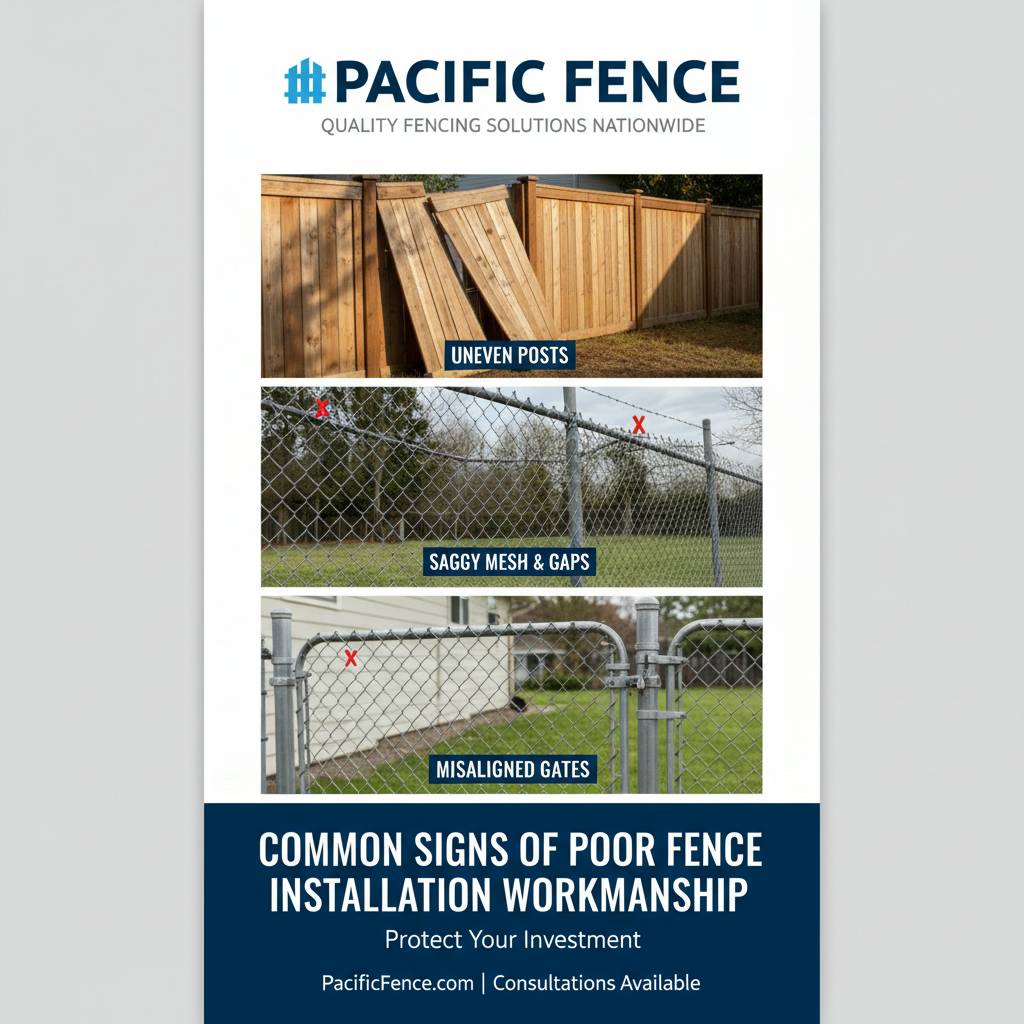 Recognizing the telltale signs of poor fence installation workmanship lets you act before a small flaw becomes a major repair. Below are frequent issues our inspectors find, with plain-language descriptions so you can spot them during a quick walkaround. If you notice several of these at once, that's a strong signal to call for a professional evaluation.
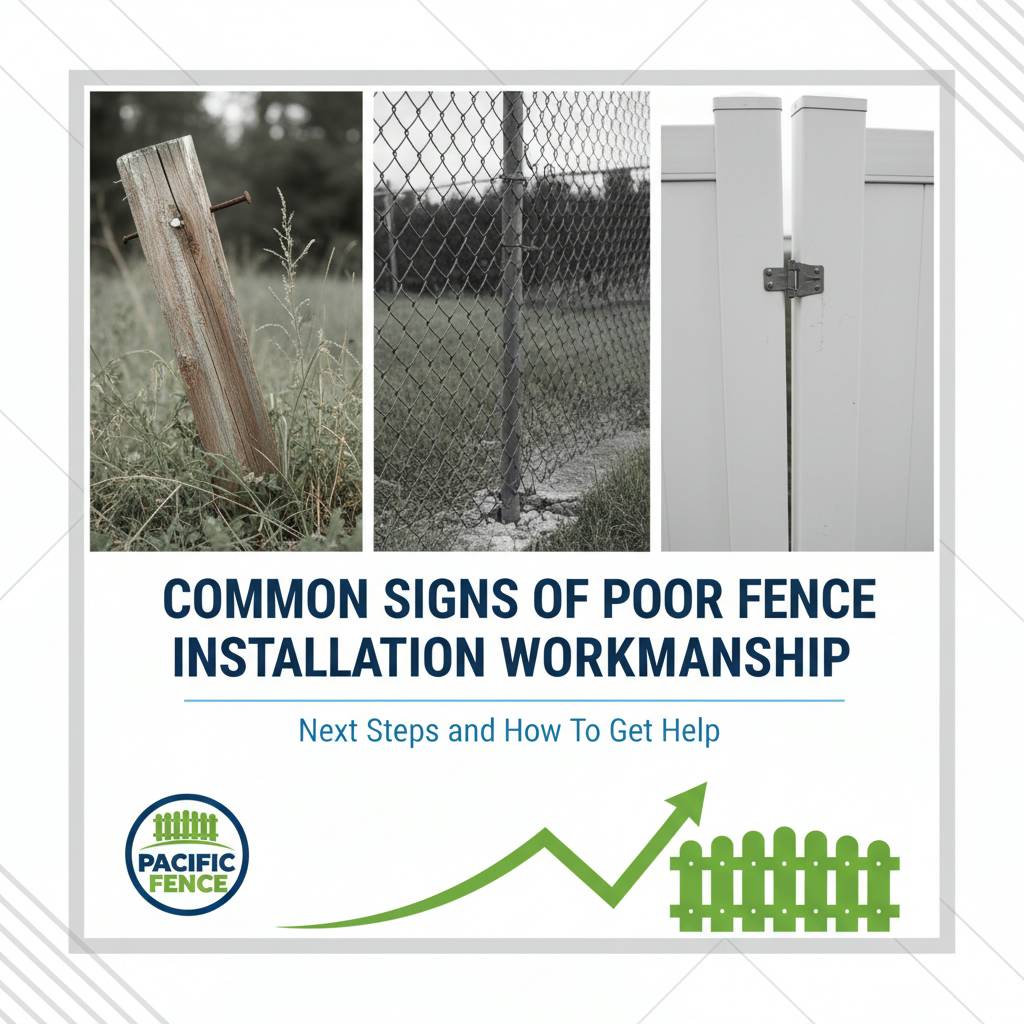
- Leaning or bowed posts: Posts should be straight and solid. Posts that tilt, flex, or have loose footing often indicate inadequate depth, lack of proper concrete footings, or poor soil compaction.
- Uneven spacing and misaligned rails: Rail and picket misalignment can be a cosmetic sign of rushed work, but it can also indicate incorrect measurements or insufficient bracing.
- Rot or untreated wood at ground contact: Wood in direct contact with soil should be pressure-treated or otherwise protected. Untreated ends or post bottoms are common trouble spots.
- Rusting or improperly driven fasteners: Nails or screws that are wrong for the material, or left protruding, accelerate failure and reduce structural strength.
- Poor gate operation: Gates that sag, scrape, or don't latch reliably often stem from weak posts, missing bracing, or inaccurate hinge placement.
These signs are the most frequent triggers of full replacements. Our inspectors look at the whole system-hardware, framing, and soil conditions-because a symptom in one area often points to a problem elsewhere. If you spot any of these issues, particularly in multiple locations, bring in a professional sooner rather than later.
What a professional inspection covers
A thorough inspection is more than a quick visual check. Pacific fence inspectors take a methodical approach, evaluating both visible damage and hidden risks. They document structural integrity, attachment methods, material suitability, and drainage or grading issues that affect the installation. Photos and a written report highlight immediate repair needs and longer-term maintenance recommendations.
Key inspection items
- Post depth and concrete footing condition-looking for proper embedment and cracks.
- Fastener types and corrosion-matching hardware to materials and environment.
- Vertical and horizontal alignment-checking for plumb posts and level rails.
- Material treatment and end-sealing-ensuring wood or composite materials are protected where they meet soil or moisture.
- Gate frames and hardware-verifying hinge placement, reinforcement, and clearance.
Inspectors also consider environmental factors-wind exposure, soil type, drainage, and nearby trees-that might accelerate wear. The goal is not only to identify existing defects but to forecast likely failure points and propose cost-effective corrective steps that prevent repeat visits.
DIY fixes vs. professional corrective work
Some simple problems are suitable for motivated homeowners: tightening screws, replacing a few fasteners with the correct stainless or hot-dipped galvanized screws, or adding a small brace to a rail. Those DIY repairs can stretch the life of a fence and are often cost-effective when the structural elements are otherwise sound.
However, when multiple posts are loose, concrete footings are cracked, or the fence spans a long windy exposure, professional intervention is the prudent choice. Improper repairs can hide a problem under a cosmetic fix, only to have the same failure occur in months. will always tell you when a fix is simple and when the job requires specialized equipment or structural correction.
Typical repair cost examples
| Repair type | Typical cost range | When necessary |
|---|---|---|
| Hardware replacement (screws, hinges) | $75-$200 | Minor corrosion or loose fasteners |
| Post resetting or replacement | $300-$800 | Leaning posts, rotten bottoms, or shallow footings |
| Section replacement or major rebuild | $800-$3,000 | Multiple failed posts, widespread rot, or structural failure |
These ranges reflect typical scenarios-your actual costs may vary with material choices, site access, and local labor rates. A professional inspection from Pacific fence provides a tailored estimate so there are no surprises.
Practical corrective steps we recommend
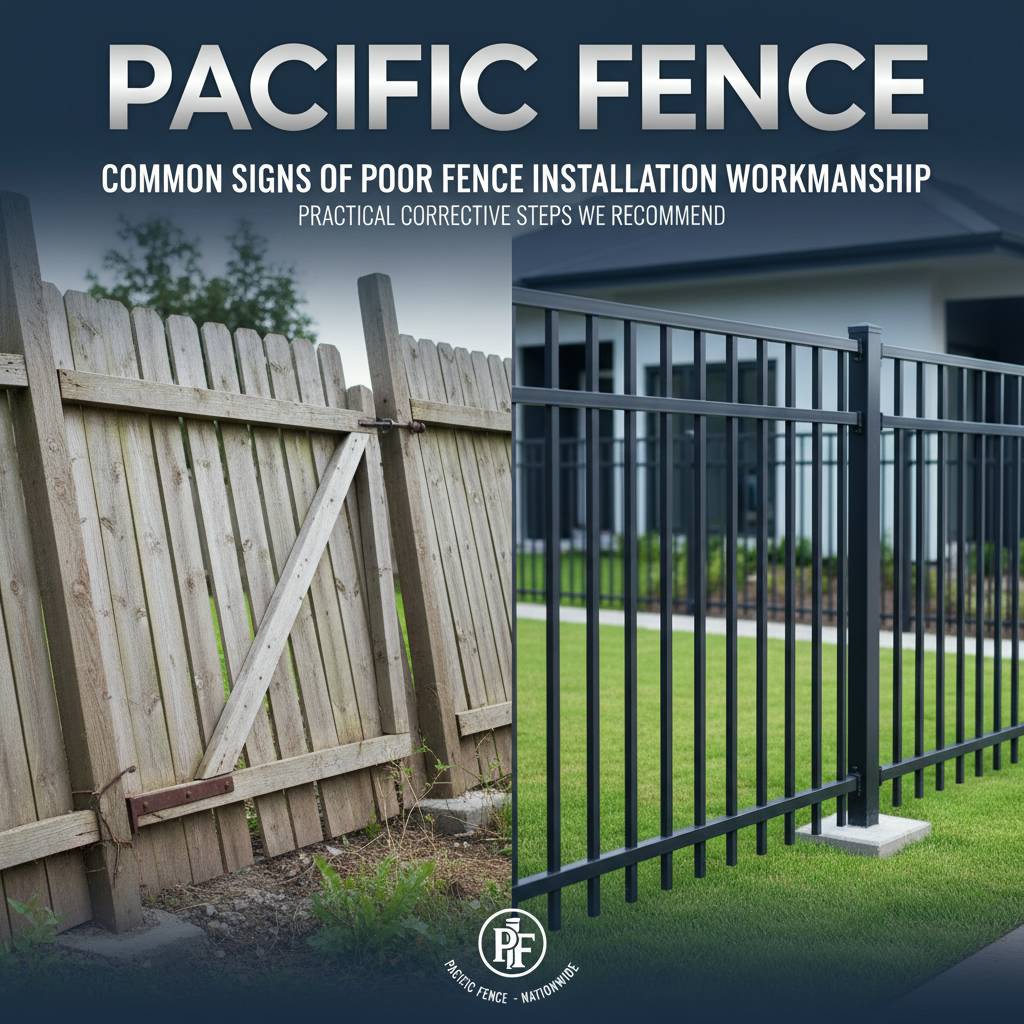 Corrective work should be targeted to the root cause. A loose top rail might mean a missing brace on several posts; correcting only the rail will be a temporary fix. Our recommended steps follow a simple hierarchy: stabilize, protect, and restore. Stabilize the structure so it's safe, protect exposed materials from the environment, and restore appearance and function with durable materials and correct attachment methods.
- Stabilize first: Reset posts to the proper depth with adequate concrete footings or helical piles, add diagonal bracing where necessary, and verify plumb and level before reattaching rails.
- Protect materials: Use suitable fasteners (stainless or hot-dipped galvanized), seal cut wood ends, and ensure post treatments are appropriate for ground contact.
- Restore properly: Replace damaged components with materials matched for strength and exposure, and install hardware sized for the gate or load it must bear.
Sometimes preventative treatments-waterproofing sealants, landscaping adjustments to improve drainage, or relocating soil away from wood contact-are needed to prevent recurrence. Each corrective plan we prepare is practical and prioritized so you can choose immediate safety fixes and budget for longer-term improvements.
Case studies: small fixes that prevented big failures
One homeowner called us after noticing a single leaning post at the corner of a long privacy fence. A quick inspection revealed poor compaction and shallow posts throughout that section. Instead of replacing the entire fence, we reset the most at-risk posts and added bracing to adjacent posts. The cost was moderate and prevented a chain reaction that would have required a full section rebuild.
In another example, a property manager noticed gates scraping the ground and catching at the latch in wet weather. An inspection found that water pooling around the posts had rotted the bottoms. We replaced the post bases with ground-contact treated wood, improved drainage, and upgraded to stainless hardware. The result: reliable gates and a warranty-friendly repair approach that extended the life of the whole fence.
Frequently asked questions
How quickly should I call an inspector after noticing a problem?
If you see leaning posts, widespread loose pickets, or evidence of rot, call right away. Even small signs can accelerate. Fast action often reduces repair scope and cost-what would have been a multi-thousand-dollar rebuild can sometimes be avoided with timely intervention.
Can I get a written report and estimate?
Yes. Pacific fence provides a detailed report with photographs, prioritized repair recommendations, and a transparent estimate. That documentation can be valuable for insurance claims, warranty discussions, or planning phased repairs over time.
Are all corrective materials the same?
No. Using the right materials for your climate and soil conditions matters. For example, coastal environments need higher-grade stainless steel hardware to resist corrosion, while heavy clay soils require deeper footings. Our recommendations are site-specific to give you lasting results.
Next steps and how to get help
If you suspect poor workmanship or simply want the reassurance that your installation will last for years, schedule an inspection. A professional evaluation gives you clarity: what needs immediate attention, what can wait, and where money spent today avoids far higher costs tomorrow. Pacific fence offers clear, practical guidance tailored to your property.
For a quick conversation or to arrange an on-site inspection, call us at 13466814020. We'll answer your questions, explain what we'll look for, and provide a transparent estimate for any recommended corrective work. A short phone call can save significant expense down the road.
Don't let small installation errors become large repairs. Contact Pacific fence at 13466814020 today for a professional evaluation and sensible recommendations to restore and protect your investment.