Avoiding DIY Fence Installation Mistakes
DIY projects often miss critical details that cause failures. Pacific fence helps homeowners avoid common traps with expert installation. Call 13466814020 to discuss safe and reliable options. Hiring professionals reduces rework and long term expense.
When you decide to take on a fencing project yourself, the appeal is obvious: control, potential savings, and the satisfaction of building something with your own hands. But many DIY fence installations go sideways because a handful of critical details were overlooked. This guide focuses on avoiding DIY fence installation mistakes and explains where small missteps turn into costly problems-rot, leaning posts, misaligned gates, and repeat repairs. Pacific fence brings experience to these common pain points so you can weigh the benefits of doing it yourself versus hiring a trusted pro.
Why DIY Fence Projects Fail: The most common pitfalls
Fence failures often start with poor planning. Homeowners skip site assessment, ignore soil conditions, and underestimate how weather or neighbor disputes will affect the project. Without proper layout and accurate measurements, panels end up misaligned or doors won't close correctly. Structures that look fine at the start can fail within a year because foundational choices were made to save time or money rather than ensure longevity.
Another frequent problem is improper post installation. Posts are the backbone of any fence; if they are not set deep enough or secured in appropriate backfill, the whole fence will lean or sag. People sometimes use the wrong concrete mix or neglect drainage, which accelerates rot or freeze-thaw damage. These issues are fixable, but they become expensive if discovered after the fence is completed.
Typical DIY mistakes to watch for
- Setting posts too shallow or without adequate concrete footings.
- Failing to check property lines and local permit requirements.
- Using the wrong materials for your climate (e.g., untreated wood in damp areas).
- Not compaction or poor backfill that allows movement over time.
- Poor gate alignment and hardware selection that leads to premature wear.
Planning and preparation: before you dig
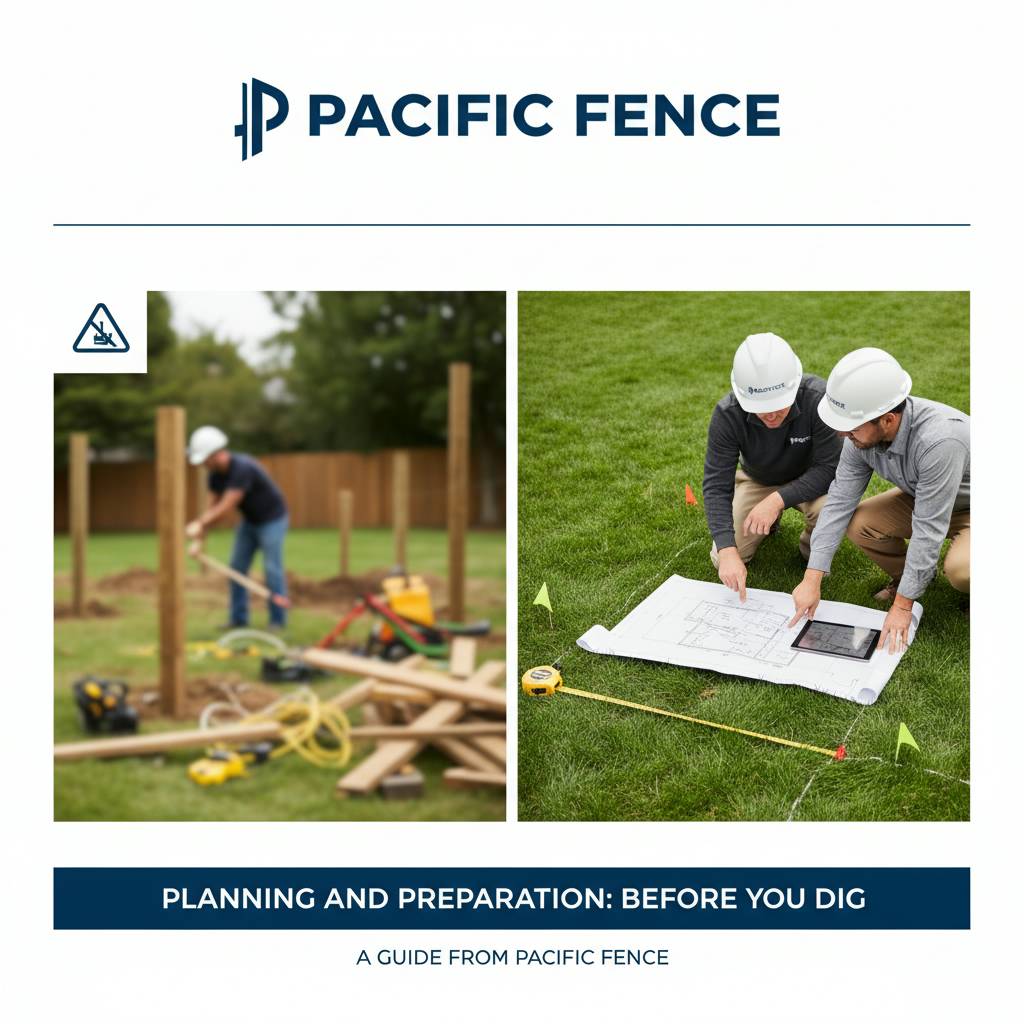 Good planning reduces surprises. Start with a clear site survey: locate property lines, underground utilities, slope and drainage patterns, and any neighborhood or HOA rules. A quick call to local utility marking services prevents the dangerous and expensive mistake of digging into buried lines. Your local building department will also indicate whether you need permits-skipping permits can mean having to remove or redo work later.
Design considerations are also important. Think about the fence's purpose-privacy, pet containment, aesthetics, or security-and choose the configuration accordingly. A privacy fence might need continuous panels and taller posts, whereas a picket fence emphasizes evenly spaced boards and decorative post caps. Taking the time to draw a plan and mark stake lines saves hours of rework after materials are ordered.
Site prep checklist
- Confirm property lines and easements.
- Call utility locating 48-72 hours before digging.
- Measure and sketch fence lines, gates, and end posts.
- Check slope and determine whether stepping, raking, or terracing is required.
- Verify permit requirements and HOA rules.
Tools, materials, and realistic budgets
Using the right tools and materials is more than a convenience; it's central to durability. Basic tools include a post hole digger or auger, level, string line, gravel for drainage, and a reliable concrete mix. For wood fences, use pressure-treated posts or rot-resistant species. For metal or vinyl, select components rated for local conditions. Investing in quality gate hardware will prevent sagging or misalignment down the road.
Cost transparency helps you avoid sticker shock. Below is a simple table that outlines typical per-post or per-panel cost ranges you might encounter. These are ballpark figures and vary by region and supply chain, but they help set realistic expectations so you can decide whether DIY savings are truly savings once your time and potential rework are factored in.
| Item | Typical Cost Range |
|---|---|
| Pressure-treated wood post (including concrete) | $75-$200 |
| Vinyl panel (per section) | $150-$350 |
| Metal post with bracket | $90-$250 |
| Gate hardware (hinges, latch) | $30-$150 |
Remember to account for hidden costs: delivery fees, rental equipment (augers or compactors), and the value of your time. Sometimes hiring a pro from the start reduces total expense because it removes the risk of having to redo work and purchase replacement materials.
Installation best practices that prevent long-term problems
Foundation matters. Set posts at least one-third of their length into the ground, deeper in areas with frost. A common standard is to place posts 2-3 feet deep depending on fence height and local frost lines. Use gravel for the bottom of the hole to improve drainage, and pour concrete around the post per manufacturer instructions. Sloping lots require stepped or raked fence lines to maintain consistent panel alignment and aesthetics.
Alignment is also a non-negotiable. Use a taut string line to keep top rails level across the project and check posts in two planes with a level. If posts are off by even an inch or two, the misalignment becomes glaring when you install panels or rails. Take your time on this front-precision during the early steps means fewer headaches months later.
Gate installation tips
Gates are often the first element to fail because they are subject to movement and frequent use. Install heavier-duty posts for gates and set them in concrete deeper than standard posts. Choose hardware rated for the gate weight and test the gate before finishing-ensure it swings freely without binding and that latches operate smoothly. Adjust hinges rather than forcing a misaligned gate to close; most sag eventually if not supported properly.
Common materials and climate considerations
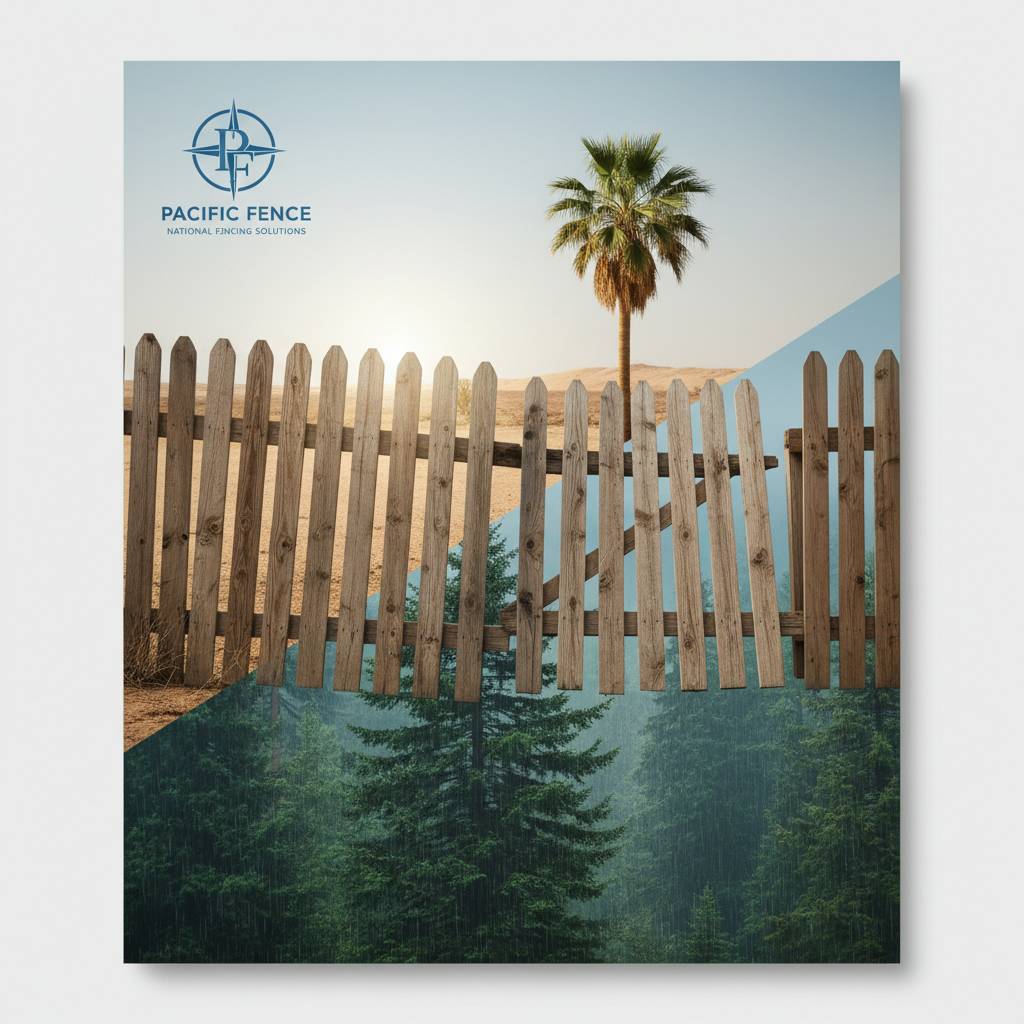 Your local climate should influence material choice. In coastal regions, salt air accelerates metal corrosion and can degrade certain fasteners; choose stainless or hot-dipped galvanized hardware. In wet climates, untreated wood will rot quickly-pressure-treated or naturally rot-resistant species like cedar are a better choice. Extreme heat can warp vinyl if panels are not properly reinforced, so follow manufacturer spacing and bracing guidelines.
Fasteners and finishes matter as much as the boards and posts. Use screws rather than nails when possible-they provide better long-term holding power. Apply sealants or stains to wood to protect against moisture and UV, and schedule maintenance checks every year to replace torn fabric, tighten hardware, or treat wood surfaces. Small seasonal maintenance tasks extend the life of your fence dramatically.
When to call a professional: weighing cost vs. risk
Some parts of fence projects are easily within a homeowner's capability, while others benefit significantly from professional help. You should strongly consider professional consultation or hiring a team when your property has complex drainage, significant slope, tree roots in the way, or unknown soil conditions. Large gates or high-security fences also require more precise engineering and hardware than typical DIY experience may provide.
Hiring a professional reduces the likelihood of rework and long-term expense. Professionals bring licensed knowledge about local codes and permit processes, have experience with tricky site conditions, and can often source materials at better prices. If you value time and want a warranty-backed installation, the upfront cost often pays for itself through reduced maintenance and fewer emergency repairs.
How Pacific fence helps
Pacific fence combines practical installation experience with local knowledge to help homeowners avoid the typical traps that lead to failing fences. Whether you need a site evaluation, a full install, or targeted fixes like post replacement and gate realignment, our team prioritizes durable materials and methods that match your budget and goals. If you're on the fence about doing it yourself, a short consult can point out risk areas and give you a clearer estimate of time and cost.
FAQ: quick answers about avoiding DIY fence installation mistakes
Q: How deep should posts be set?
A: A good rule of thumb is to bury posts one-third of their total length or at least 2-3 feet deep depending on the local frost depth. In colder climates, set them deeper to avoid frost heave.
Q: Do I always need a permit?
A: Many municipalities require permits for fences above a certain height or in specific zones. Check with your local building department before starting. Skipping the permit can force you to alter or remove completed work.
Q: Can I use reclaimed materials?
A: Reclaimed materials can be great for practice fences or aesthetic projects, but ensure structural components like posts and rails are sound. Don't use reclaimed posts that show rot or significant insect damage.
Case study: a typical avoidable failure and how it was fixed
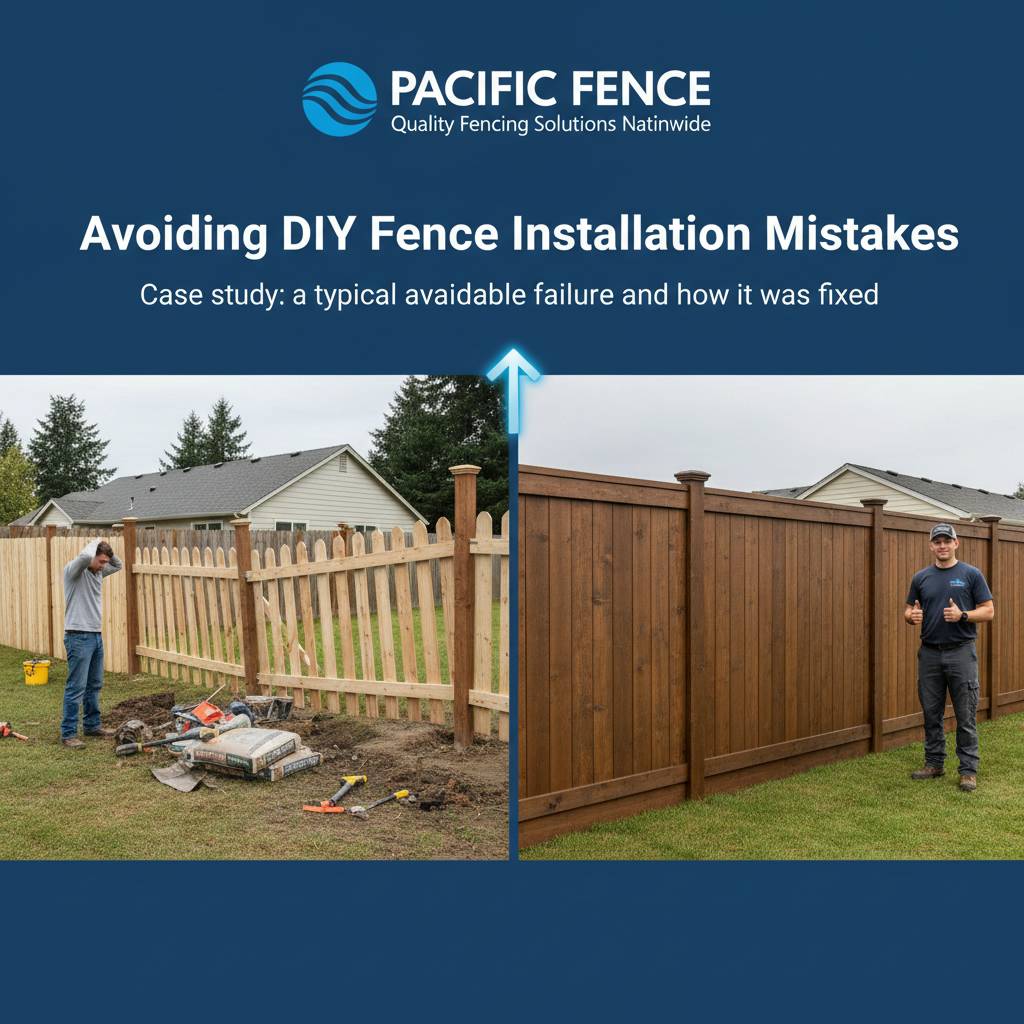
A homeowner attempted a 6-foot privacy fence on a sloped yard and set posts at inconsistent depths without checking the frost line. After one winter the posts began leaning and two panels split where the ground shifted. The repair involved removing and resetting posts with proper concrete footings, adding gravel drainage, and installing wind braces at the ends. The upfront extra time to plan for slope and drainage would have prevented the rebuild. This is a common example of how initial shortcuts lead to bigger costs later.
Call to action
If you want help preventing the most common failures from the start, reach out to Pacific fence for a no-pressure consultation. A short walkthrough can identify key risks and give you an accurate cost comparison between a DIY approach and professional installation.
13466814020 is the quickest way to get answers about materials, costs, and timelines. Whether you're tackling a small repair or a full replacement, Pacific fence can advise on practical, long-lasting solutions. Mention a site visit if you want a free onsite estimate.
For homeowners who value reliability and want to reduce rework and long-term expense, partnering with professionals is a smart choice. Contact Pacific fence at 13466814020 today to discuss how to avoid common traps and ensure your fence stands strong for years to come.